A quality complaint is not the moment for a supplier to defend itself. It is the moment to create certainty for the buyer: someone is examining the problem, a remedy is available, and the next order will include a clearer prevention plan.
What happened in this umbrella quality complaint?
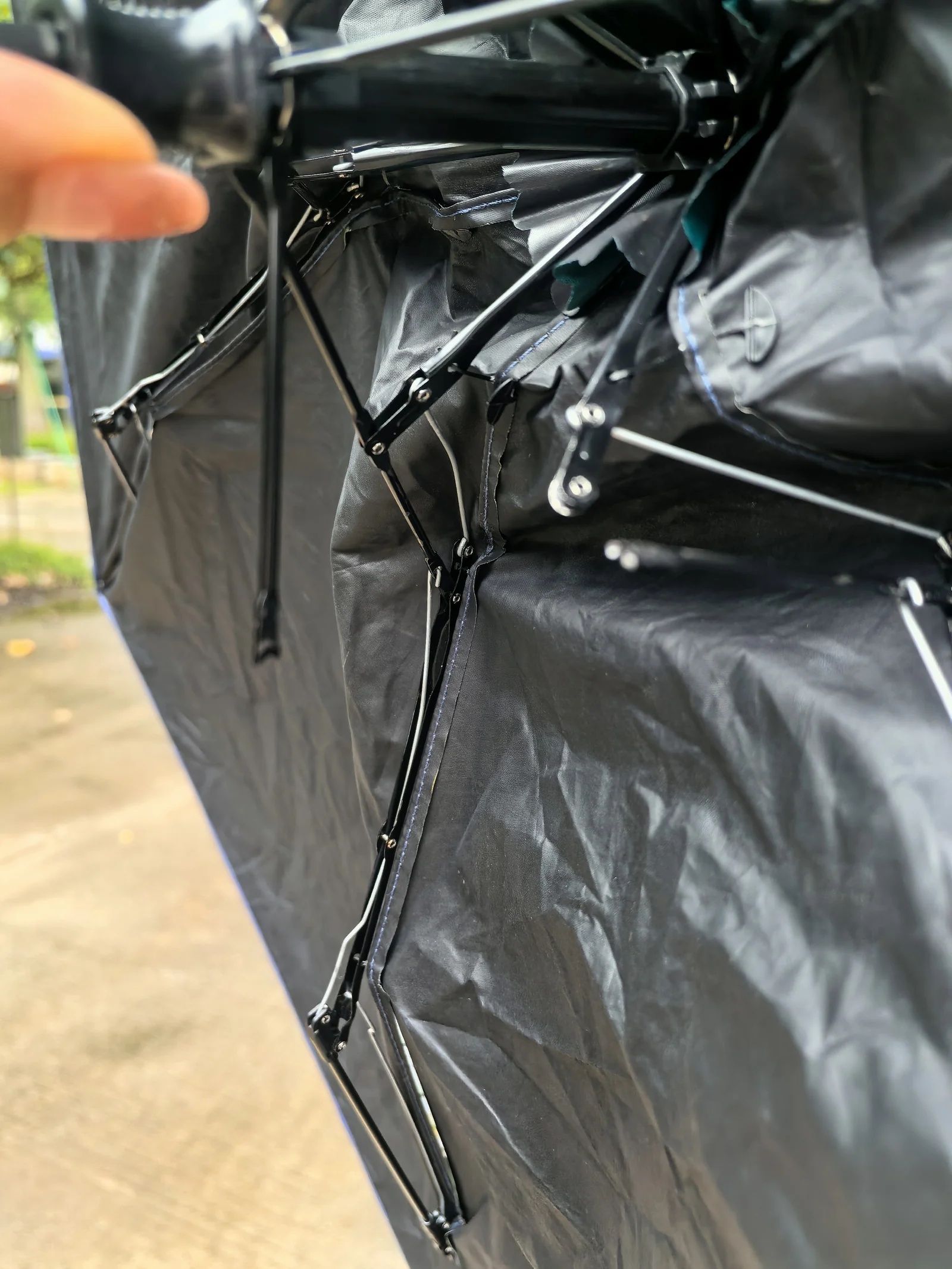
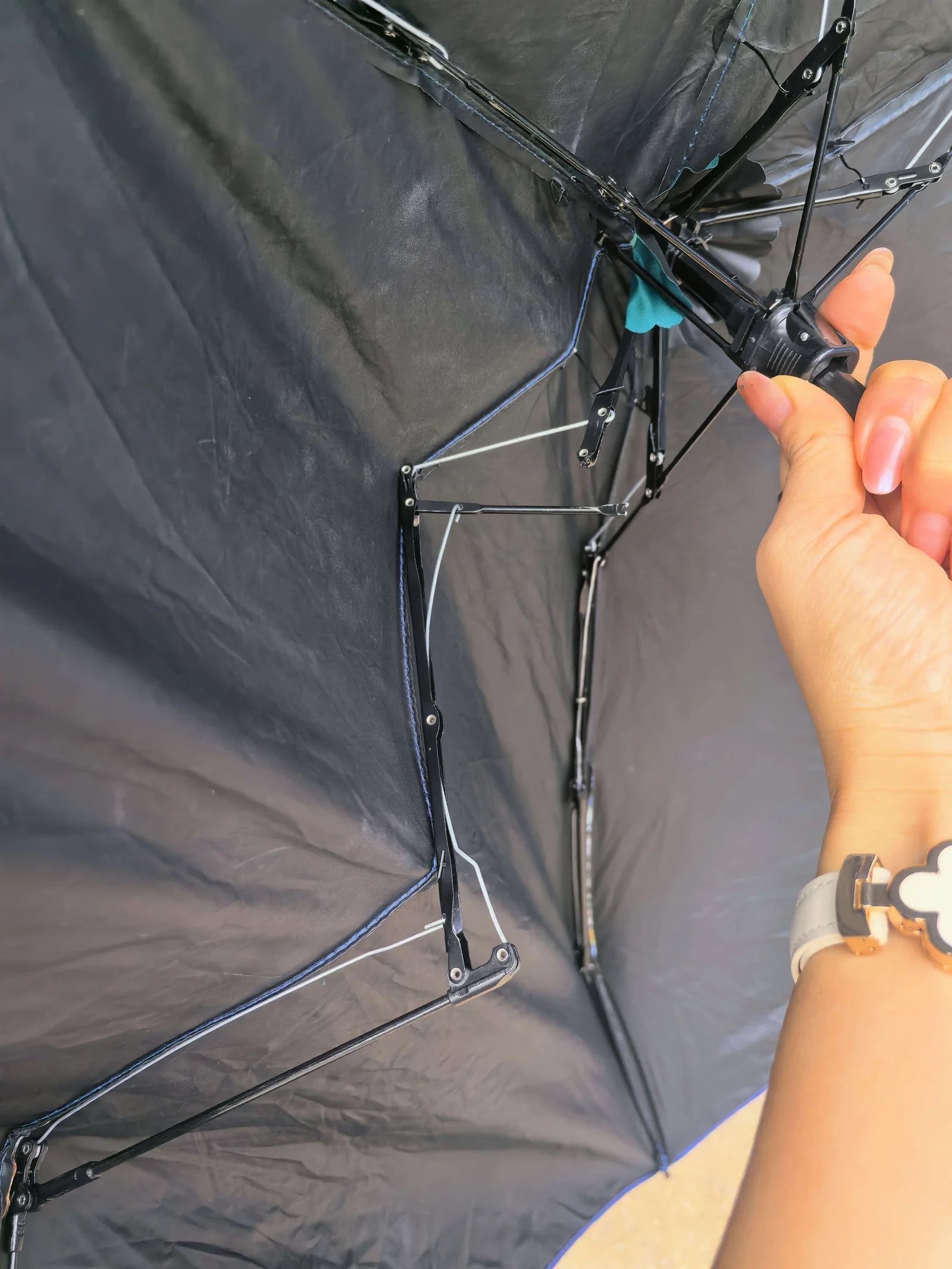
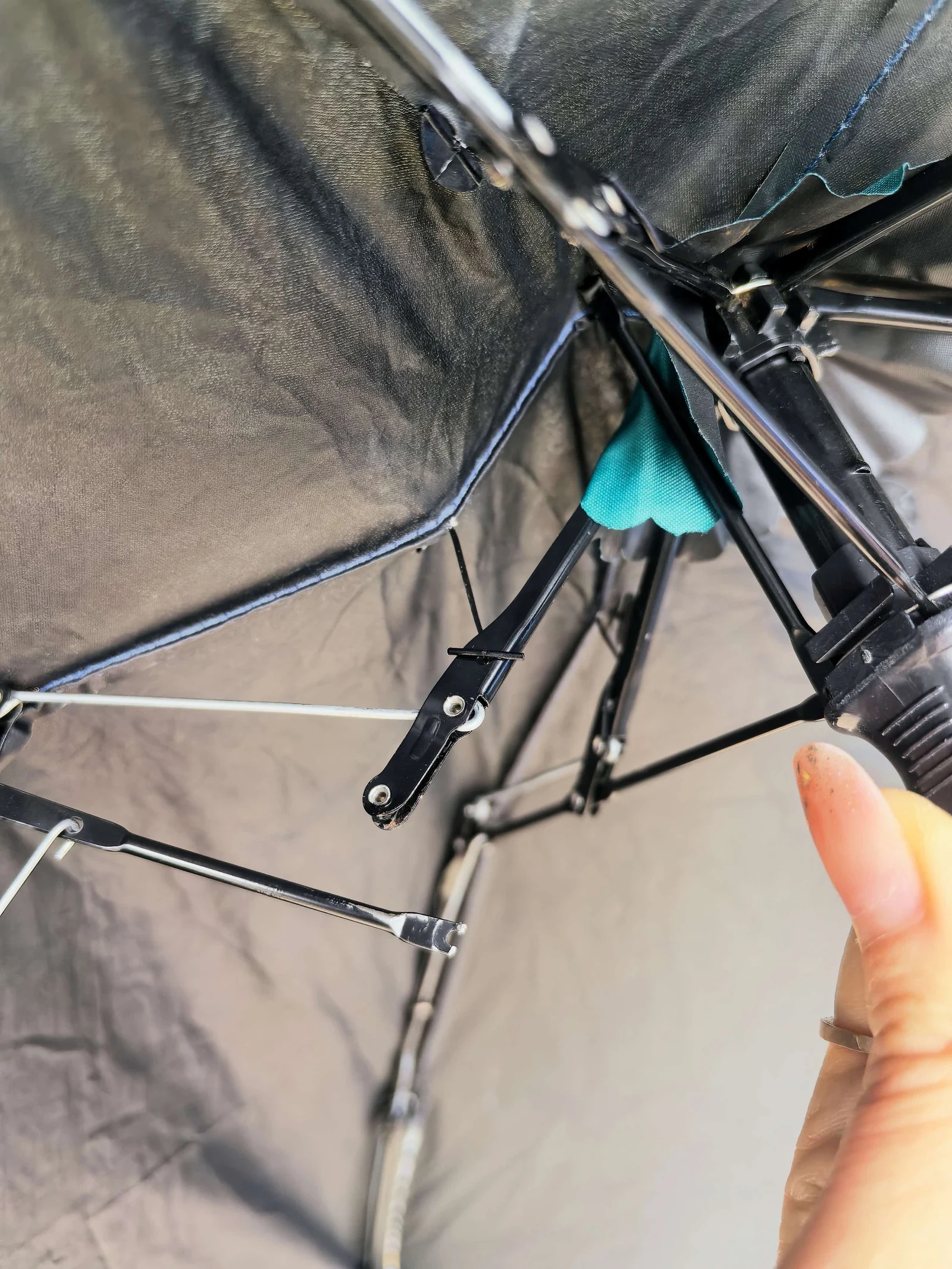
A buyer who had worked with us for nearly a year sent a photo of a damaged umbrella. The break appeared near the eyelet area where the frame components are joined. The complaint concerned one five-fold, six-rib automatic umbrella.
Two explanations were possible. Strong wind may have loaded the compact frame beyond its intended operating range. An isolated production-related factor near the eyelet installation could also have weakened that local area. The available photo did not prove either explanation, so we did not present a guess as a conclusion.
Why did we avoid an immediate explanation?
Fast explanations often sound like excuses. A supplier may say the umbrella was used in strong wind, while a buyer may assume the entire batch is defective. Neither position is reliable without evidence.
One damaged unit can result from several different conditions:
- wind or impact above the frame’s intended use;
- an isolated weakness in a rib, joint or eyelet area;
- variation during frame assembly;
- damage during transport, storage or handling;
- a specification that is too light for the buyer’s actual use environment.
The correct response is to separate facts from assumptions. We first identify the model and failure point, ask how many units are affected, review the approved specification, and compare the damaged unit with retained samples or other units from the same production batch.
What did we offer the buyer immediately?
Regardless of the final cause, the buyer had a practical problem that needed a practical answer. We offered two immediate options:
- Repair: if returning the umbrella was convenient, we would arrange repair.
- Replacement: if return shipping was inefficient, we would provide a replacement unit.
The buyer did not spend time arguing about responsibility. Instead, the buyer asked the more useful question: “How can we avoid this next time?” That shifted the discussion from fault to prevention.
Two prevention options for future promotional umbrella orders
Option 1: include 0.5% spare units
For every 1,000 umbrellas, the order would include five spare units. If a small number of units later require replacement, the buyer can respond immediately without waiting for another production run or arranging an international return.
For promotional and gift-umbrella projects, this is often the most efficient risk-control method. Events and distribution schedules are time-sensitive, and a spare-unit policy can be more useful than returning one low-value product across borders.
Option 2: upgrade the umbrella frame
The second option was to use a more stable, higher-specification frame. At the time of this discussion, the estimated additional cost was about RMB 3.5 per umbrella. That amount was specific to this model and sourcing period; current pricing must always be reconfirmed against the final specification and order date.
The buyer chose the spare-unit option. The product was a giveaway umbrella, so maintaining cost efficiency mattered. Adding the frame upgrade to every unit would have increased the total budget considerably, while five spares per 1,000 pieces addressed the buyer’s operational risk more economically.
A practical root-cause process for umbrella buyers and factories
| Step | What to check | Why it matters |
|---|---|---|
| 1. Record the evidence | Clear photos, video, order reference, model and affected quantity | Prevents different products or batches from being confused |
| 2. Identify the failure point | Rib, stretcher, eyelet, runner, shaft, handle, seam or canopy | Each failure point has different possible causes |
| 3. Confirm use conditions | Wind, impact, opening method, storage and transport | Separates environmental load from production variation |
| 4. Review the specification | Frame grade, materials, rib count, folding structure and approved sample | Shows whether the product matched the intended use |
| 5. Check the batch | Retained samples, inspection records and reports from other units | Helps distinguish an isolated failure from a batch-level issue |
| 6. Contain the problem | Repair, replacement, spare units or segregation | Protects the buyer’s immediate schedule |
| 7. Prevent recurrence | Process correction, inspection point, spare policy or specification upgrade | Turns the complaint into a measurable improvement |
Does one broken umbrella mean the whole batch is defective?
Not necessarily. Any industrial product can have an isolated failure, but a supplier should never use that fact to dismiss a complaint. The affected rate, repeatability, failure location and batch evidence must be checked.
A single failure may require replacement and monitoring. Repeated failures in the same location may require a batch review, additional sampling or a change to the bill of materials. The response should be proportional to the evidence.
What should buyers define before ordering custom umbrellas?
- the intended use: retail, daily use, event giveaway or corporate gift;
- the expected weather and wind exposure;
- the approved frame, fabric, handle and opening mechanism;
- sample approval and production inspection requirements;
- acceptable replacement or spare-unit arrangements;
- how complaints will be documented and handled.
Our custom folding umbrella options can be matched to different budgets and use conditions. Buyers should compare the complete specification, not only the external appearance or unit price. More practical sourcing articles are available in our Buyer Guides.
Frequently asked questions
What information should I send when reporting an umbrella quality problem?
Send clear photos or video, the order or batch reference, the product model, the number of affected units, the failure location and a brief description of how the umbrella was being used.
Will a factory always replace a damaged umbrella?
The remedy depends on the evidence, order terms and practical shipping conditions. In this case, we offered repair or replacement before the final cause was confirmed because the buyer needed an immediate solution.
Why include spare umbrellas in a bulk order?
Spare units let distributors, gift companies and event buyers replace an isolated damaged item immediately. For this project, the agreed approach was five spare umbrellas per 1,000 pieces.
Is a higher-priced umbrella frame always necessary?
No. A stronger frame may reduce risk, but it also increases cost. The suitable specification depends on the use environment, product position, order budget and acceptable replacement process.
Can a photo alone prove whether the problem was caused by use or production?
Often it cannot. A photo can identify the failure area, but a reliable conclusion may also require use details, affected quantity, retained samples and batch inspection records.
Trust is built by solving problems
A professional umbrella factory is not defined by claiming that problems never occur. It is defined by how clearly it investigates, how quickly it contains the problem, and whether it turns the result into a better specification or process.
Buyers need certainty: who will respond, what evidence will be reviewed, what remedy is available and what will change in the next order. That is how long-term supplier relationships are built.
By Aihua Chen | Hand in Hand Umbrella Factory
Aihua Chen has more than 26 years of experience in custom, promotional and gift umbrellas for global buyers.
Need help reviewing an umbrella specification or quality issue?
Send the product photos, order quantity, intended use and required delivery schedule. Our team can review the details before recommending a repair, replacement, spare-unit policy or specification change.