
BUYER GUIDE · HOTEL UMBRELLA SAMPLING
How Can Small-Batch Hotel Umbrellas Match Brand Colors? Lessons from Two Full-Umbrella Sample Rounds
By Aihua Chen | Hand in Hand Umbrella Factory
Direct Answer: How Can a Small Hotel Umbrella Order Match a Brand Color?
For a small hotel umbrella order, first check whether the buyer accepts an available stock-fabric color. If not, compare custom dyeing with digital printing against the actual quantity, fabric, target color, underside appearance and budget. Digital printing may provide a workable route when a dyeing supplier’s minimum is impractical, but it still requires physical color trials and approval of a complete umbrella. In this case, the stock-fabric umbrella was rejected; a second complete sample, using exterior digital printing and an interior black coating, was approved after three print-color adjustment trials within that second approach.
Case Scope and Confirmed Outcome
This guide draws on a hotel golf umbrella sampling project handled by Hand in Hand Umbrella / Guangzhou Hand in Hand Umbrella Factory. The customer wanted a small quantity, but the canopy color still had to meet the hotel’s brand identity requirements.
We produced two complete umbrella samples in total. The three print-color adjustment trials were part of the second sampling approach; they were not three additional complete umbrella samples.
The confirmed outcome is that the customer approved the second sample, confirmed the color and quantity, and placed the order. This case does not establish that bulk production has been delivered. The exact order quantity, sampling dates and bulk delivery status have not been disclosed.
Brand names and logos appearing in the customer’s reference materials identify the design requirement. They do not establish direct procurement by Marriott headquarters or an official or authorized supplier relationship with the hotel group.
Project Overview
| Item | Details of this project |
|---|---|
| Intended use | Hotel-branded golf umbrellas |
| Main requirement | A small order with a canopy color acceptable against the customer’s brand-color reference |
| First complete sample | The closest stock-fabric color we found; the customer did not approve the color |
| Second complete-sample approach | Digital printing on the exterior with a black coating on the interior |
| Color development | Three print-color adjustment trials within the second approach |
| Complete umbrella samples | Two in total—not five |
| Custom-dyeing constraint | One supplier quoted a 5,000-yard minimum; this was supplier-specific |
| Confirmed outcome | Second sample approved; customer formally placed the order |
| Information boundary | No claim of completed bulk delivery or guaranteed zero color difference |
1. Why Did We Start by Looking for Stock Fabric?
For a specified-color project, we generally begin by checking available stock fabric. If the customer accepts an existing color, there may be no need to dye a separate batch solely for that umbrella order. This can reduce extra material costs and minimum-order pressure.
For this hotel project, we first sent fabric swatch boards to the customer and asked whether any available color would be acceptable. The customer did not select one.
We then checked fabric in our warehouse and contacted fabric merchants and mills. We were looking for both an acceptable color and a supply quantity that made sense for the order—not simply a color that looked similar in a photograph.
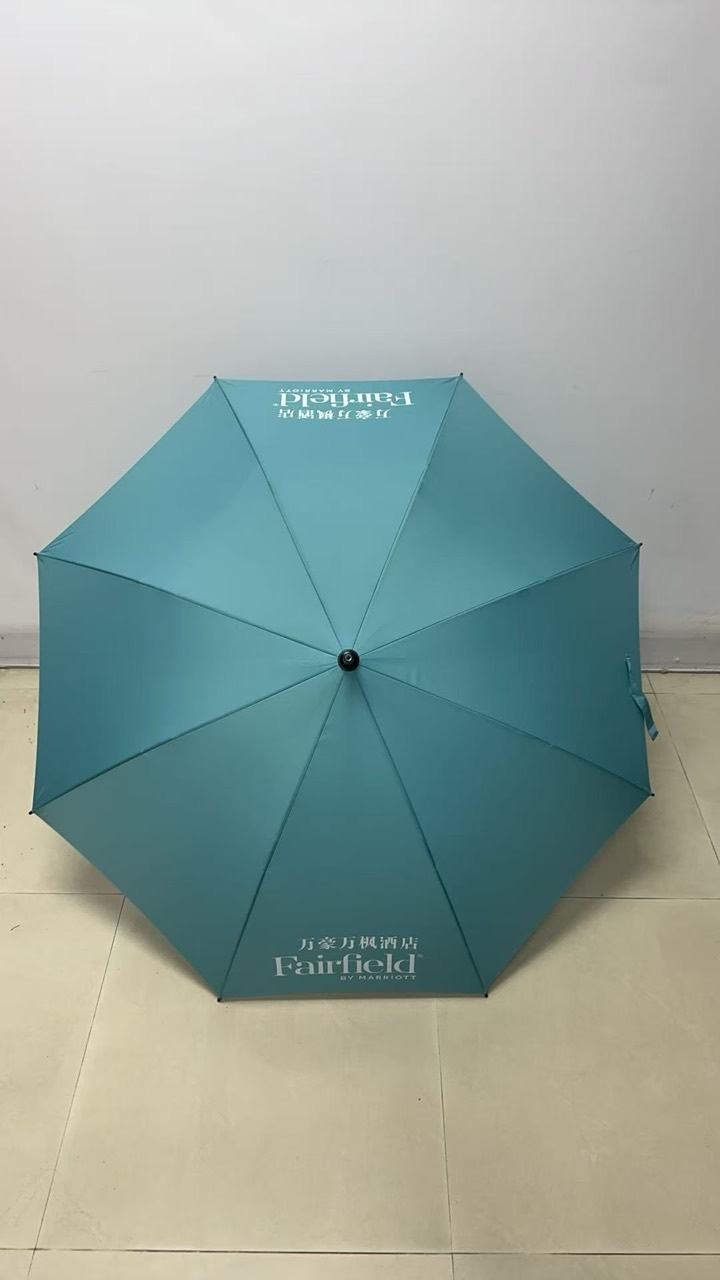
The search did not produce a stock color that fully met the requirement. We selected the closest available fabric, made the first complete umbrella sample, and sent it to the customer for assessment.
The customer’s answer was still no: the color was not suitable.
What Did the First Rejection Tell Us?
For a buyer with strict brand-color requirements, the nearest stock color is not necessarily an acceptable color.
The first sample clarified the actual acceptance boundary. Continuing to select from similar stock colors would not resolve this order. We needed to assess a different production approach.
That does not mean stock fabric is inherently unsuitable for hotel umbrellas. It means the available options were not approved for this particular project.
2. Why Did We Not Simply Custom-Dye the Fabric?
Custom dyeing is one route to a specified fabric color, but the supplier’s minimum order must be considered.
In our previous purchasing experience, some custom-color fabrics could be arranged from around 3,000 yards. In a more recent discussion with one fabric supplier for this project, the quoted requirement was 5,000 yards.
The 5,000-yard requirement came from that supplier; it is not an industry-wide minimum. Buyers and manufacturers need to confirm the conditions with the supplier handling the specific fabric.
For a small umbrella order, that fabric commitment can materially affect whether custom dyeing makes sense. The customer did not need a quantity large enough to justify that purchase, and we did not want the customer to carry unnecessary material inventory just to meet a dyeing minimum.
Why Can We Not Convert 5,000 Yards Directly into 5,000 Umbrellas?
Fabric consumption depends on the umbrella model, dimensions, fabric width and cutting losses. One yard of fabric is not automatically equivalent to one finished umbrella.
The appropriate calculation has to follow the actual specification and cutting plan. The supplier’s yardage minimum alone does not establish an umbrella-order minimum.
After the first complete sample was rejected, we therefore evaluated digital printing as another way to achieve the requested appearance within the customer’s actual purchasing needs.
3. How Did the Second Approach Use Digital Printing?
Digital printing offered a different route to the target canopy color, but it was not a promise that one print attempt would be accepted.
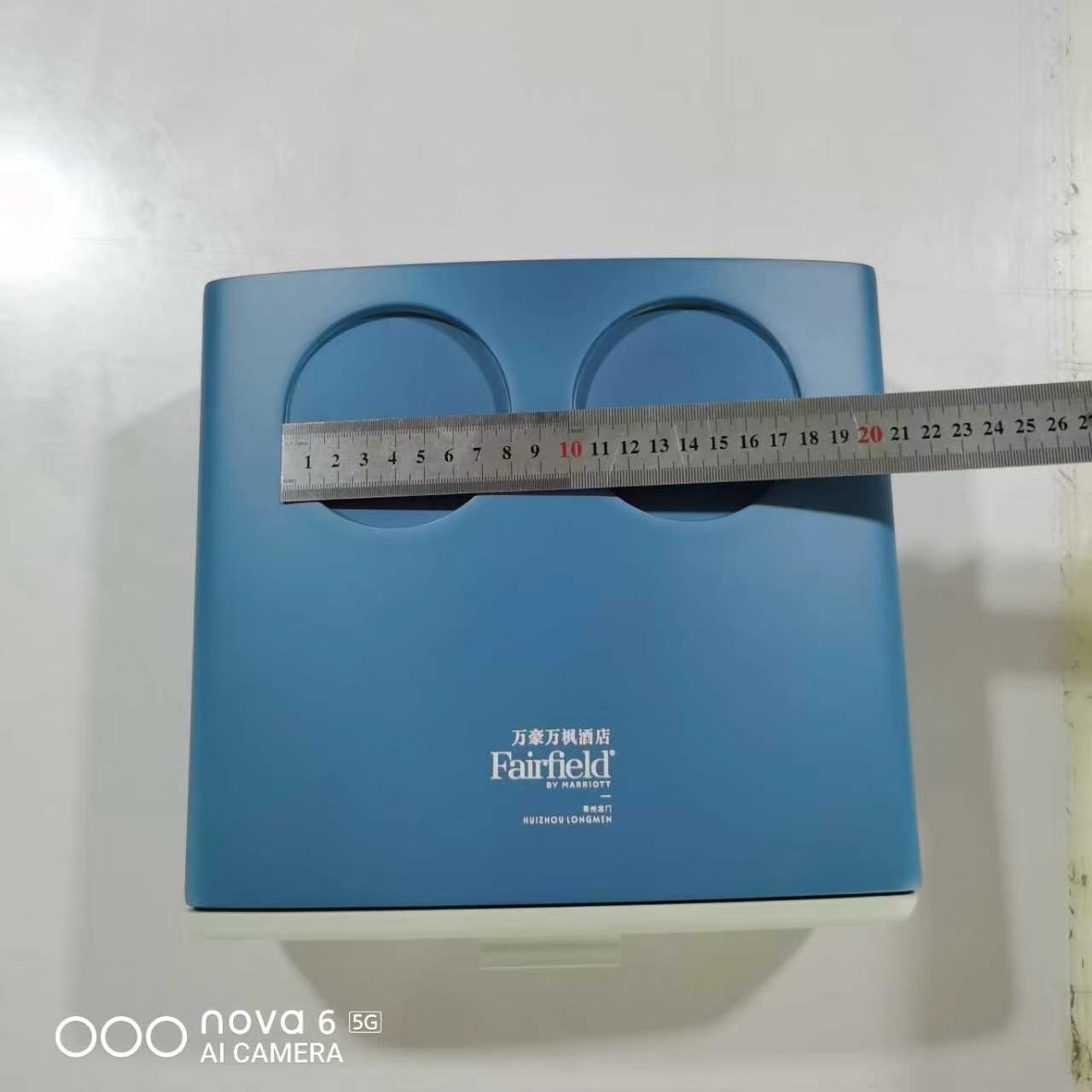
For the second approach, we worked from the physical brand-color reference supplied by the customer and adjusted the printed canopy color against that reference.
Three Print-Color Trials Within the Second Complete-Sample Round
We carried out three print-color adjustment trials before settling on the color approach used for the second complete umbrella sample.
The sequence was:
- First complete umbrella: closest available stock fabric; color rejected.
- Second approach: exterior digital printing, with three print-color adjustment trials.
- Second complete umbrella: made using the adjusted printing approach and submitted for approval.
These are two full-umbrella sampling rounds, not five. Color development within one approach and the manufacture of a complete umbrella are different stages.
Unlike the first sample, which used an existing fabric color, the second umbrella was assembled after the print color had been adjusted. The customer could then evaluate the color as part of the complete product, together with its overall appearance.
Why Was a Complete Physical Sample Still Necessary?
A proposal saying that a color can be matched is not proof that the finished umbrella meets the customer’s requirement.
The practical acceptance point is the customer’s assessment of the physical color sample and complete umbrella—not the printing method’s name.
In this project, the customer accepted the final sample’s color. That is a project-specific result, not a guarantee of zero color difference across all fabrics, colors or future orders.
Why Should Color Approval Include Agreed Lighting?
General color science helps explain why a physical comparison matters. X-Rite describes metamerism: two materials can look alike under one light source yet differ under another. A match in a single photograph or room therefore need not remain a match under different lighting.
For future hotel umbrella projects, agree which physical reference governs approval and compare the printed fabric and complete sample under consistent lighting, including the intended use environment where practical. Record the approved sample and any agreed tolerance. These are purchasing recommendations based on the color principle, not a claim that this hotel project underwent instrumented color-difference or multi-light testing.
4. Why Combine Exterior Digital Printing with an Interior Black Coating?
The exterior color was only part of the design. We also needed to consider what the umbrella would look like from underneath when opened.
Under the single-sided printing approach assessed for this project, printing the requested color on the outside of a white base fabric would leave a white appearance on the underside.
A white underside is not automatically a quality defect. Whether it is appropriate depends on the intended design and the appearance of the whole umbrella.
For this hotel golf umbrella, we wanted the exterior to express the brand color and the interior to look coordinated. We compared the available approaches.
What Was the Alternative?
Printing on both sides could give the exterior and interior their own specified colors or artwork. However, adding an interior print also meant considering the additional processing cost.
For this particular order, we selected:
- Exterior: digitally printed color developed through the adjustment trials.
- Interior: a black coating, rather than leaving the white base fabric visible.
- Cost consideration: no additional color-printing pass solely to create the intended underside appearance.
This was a decision based on this project’s quantity, design and budget. It is not a rule that every hotel umbrella should have a black-coated underside.
If a customer wants branding or colored artwork on the inside as well, double-sided printing or another suitable construction needs its own assessment. If a white underside is acceptable, that should also be considered rather than ruled out automatically.
5. What Happened After the Second Complete Sample?
Once the second complete umbrella sample was ready, we sent it to the customer for another review.
The customer approved the color and overall umbrella appearance, then confirmed the color and order quantity and formally placed the order.
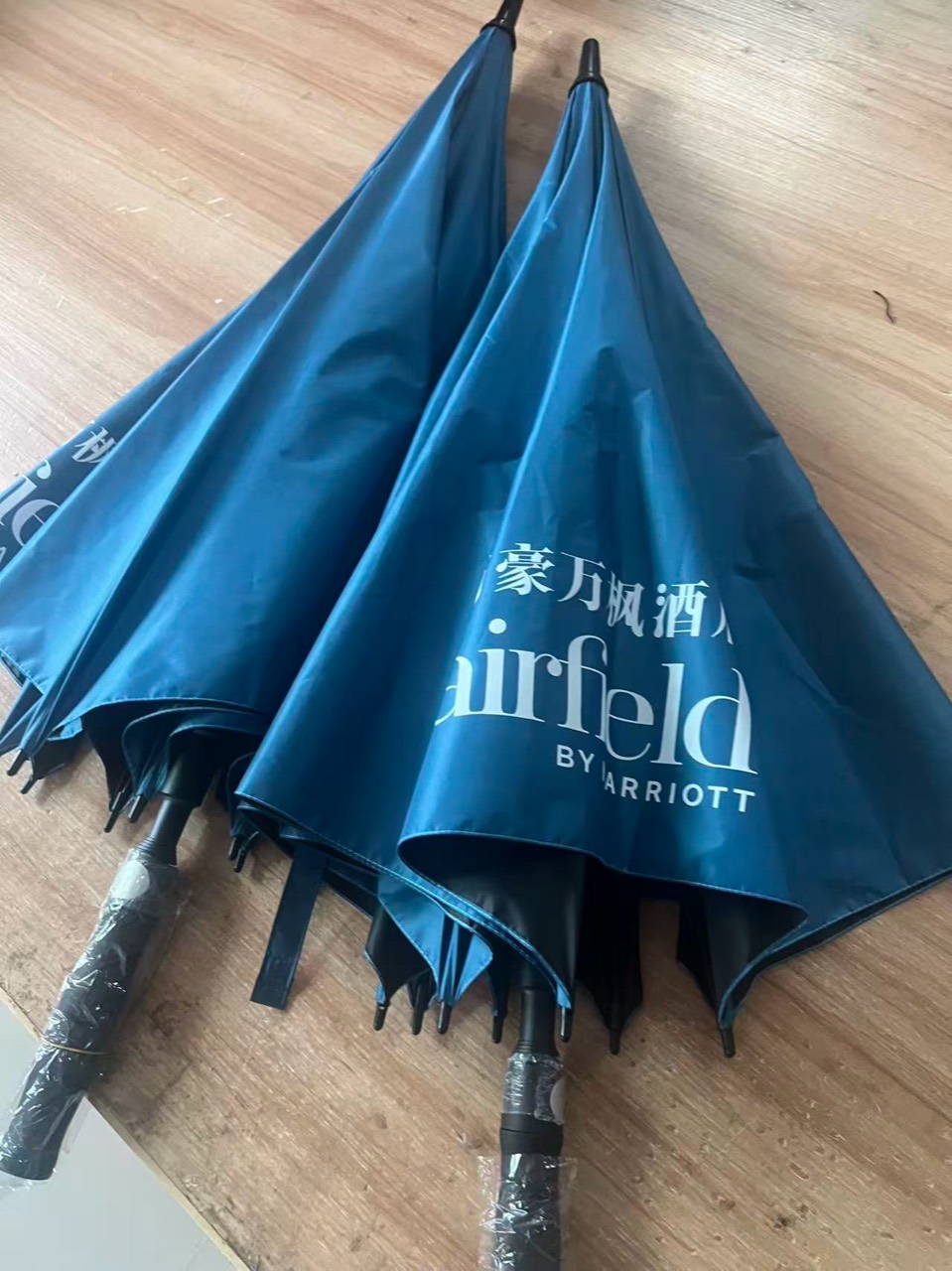
The approved second sample gave the customer a physical reference for confirming the color, overall appearance and order.
Each stage answered a different purchasing question:
- Searching stock fabric tested whether an existing material could reduce cost and minimum-order pressure.
- The first sample rejection showed that a near-match was insufficient.
- Assessing digital printing provided an alternative for the actual order size.
- Three print-color trials developed the second approach.
- The second complete sample allowed the customer to assess the finished combination.
The customer needed more than a roughly similar canopy color. The umbrella had to bring together an acceptable brand color, overall appearance, quantity and cost.
What Should Buyers Prepare Before Requesting Brand-Color Hotel Umbrellas?
| Information to provide | What it helps establish |
|---|---|
| Physical brand-color reference, an existing approved sample or clearly specified color-code information | The intended color target and the reference to use during development |
| Expected order quantity, umbrella type, dimensions and use | Whether stock fabric, dyeing or printing is practical for the project |
| Exterior and interior requirements | Whether a white underside, black coating or additional interior printing is acceptable |
| Logo artwork, print positions and dimensions | The proposed layout and the production details to assess |
| Budget and timing | Whether multiple color trials can be accommodated, when the sample must be approved and when delivery is needed |
Clearer information makes it easier to determine whether to prioritize stock fabric, custom dyeing or printing.
Hand in Hand Umbrella’s approach to this kind of project is to clarify what the buyer actually needs, then compare quantity, materials and processing options. A small order does not automatically mean accepting the nearest stock color, but the feasibility of a brand-color requirement must be demonstrated through sampling and customer approval.
Frequently Asked Questions
Can small-batch hotel umbrellas be made in a specified brand color?
Stock fabric, custom dyeing and digital printing can be evaluated. When stock colors are not accepted and a dyeing minimum is impractical, digital printing may be an option. Its suitability still depends on the fabric, target color, interior appearance and budget, followed by physical sampling and approval.
Why were there three color trials if there were only two complete umbrella samples?
They were different stages. The first complete umbrella used stock fabric and its color was rejected. The second approach used digital printing; three print-color adjustment trials took place within that approach before the second complete umbrella was made for approval. There were two complete umbrella samples in total.
Does custom-color fabric always require a 5,000-yard order?
No. In this case, 5,000 yards was the requirement quoted by one fabric supplier, not an industry-wide threshold. The relevant supplier must confirm the minimum for the actual fabric. Fabric yardage also cannot be converted directly into a number of umbrellas without the specification and cutting calculation.
Must brand-color hotel umbrellas have a black-coated underside?
No. This project used a black coating to balance the interior appearance and budget. A buyer who accepts a white underside or requires interior colors and logos should have those options assessed separately. The suitable construction depends on the particular design and order.
Can photographs be used as the final color-approval reference?
In this case, the customer’s physical reference and the approved physical sample were used for acceptance. Photographs document the design and sampling process, but lighting, cameras and screens can alter their appearance. Differences between the photographs are not precise color-difference test results, and this case does not promise zero color difference.
Case Source and Image Notes
This guide is based on the project account and materials supplied by Aihua Chen of Hand in Hand Umbrella Factory, concerning this hotel’s umbrella sampling process. The manufacturer’s experience in the umbrella industry began in 2000.
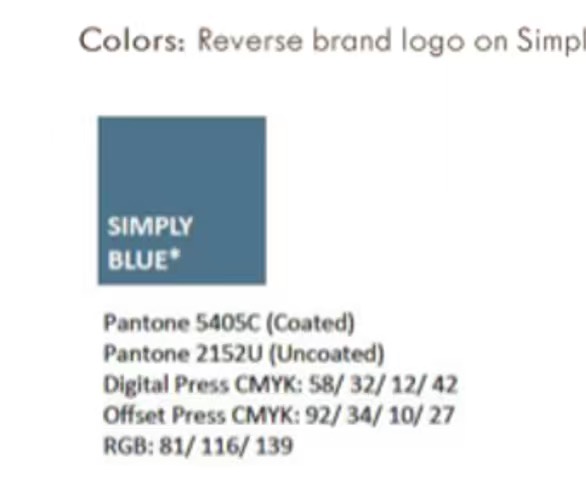
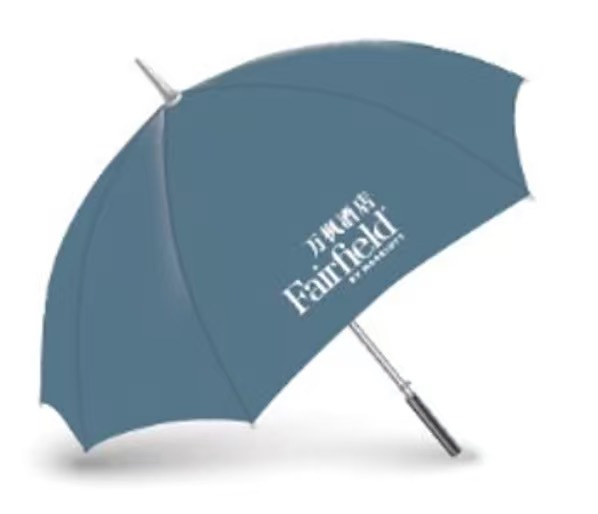
The five images have different roles: a brand-color specification screenshot, a full-umbrella design rendering, a first-sample photograph, a customer-supplied physical color reference and a second-sample photograph. The rendering is not presented as a finished-product photograph.
The three print-color trials are recorded in Aihua Chen’s project account; the images document the two complete samples, not each intermediate color trial. The published outcome remains sample approval and order placement.
Conclusion
For a small hotel umbrella order, brand-color matching is a purchasing and sampling decision—not simply a choice of printing method. This project moved from an unapproved stock-fabric sample to a digitally printed exterior and black-coated interior, with three color-adjustment trials inside the second approach. The second complete sample was approved and the customer placed the order.
The lesson is to compare realistic material options, clarify the inside as well as the outside appearance, and obtain approval of the physical sample before treating a proposed color solution as accepted.
Related Buyer Resources
Compare four umbrella printing methods, or read our small-batch high-end umbrella feasibility case. For a project assessment, send our team your color reference, quantity, umbrella type and sampling deadline.