
Making umbrellas means watching more than the weather. Sometimes, we also have to follow what is happening far away.
By Aihua Chen | Hand in Hand Umbrella Factory
Finishing production and packing does not confirm a shipping route, available capacity or delivery date. For this French customer’s umbrella order, we had already sent packing photos when the logistics provider raised new concerns about the original shipping plan. The next steps were to check viable routes, clarify what each transit estimate covered and keep the customer informed, rather than continue presenting the earlier estimate as a firm delivery commitment.
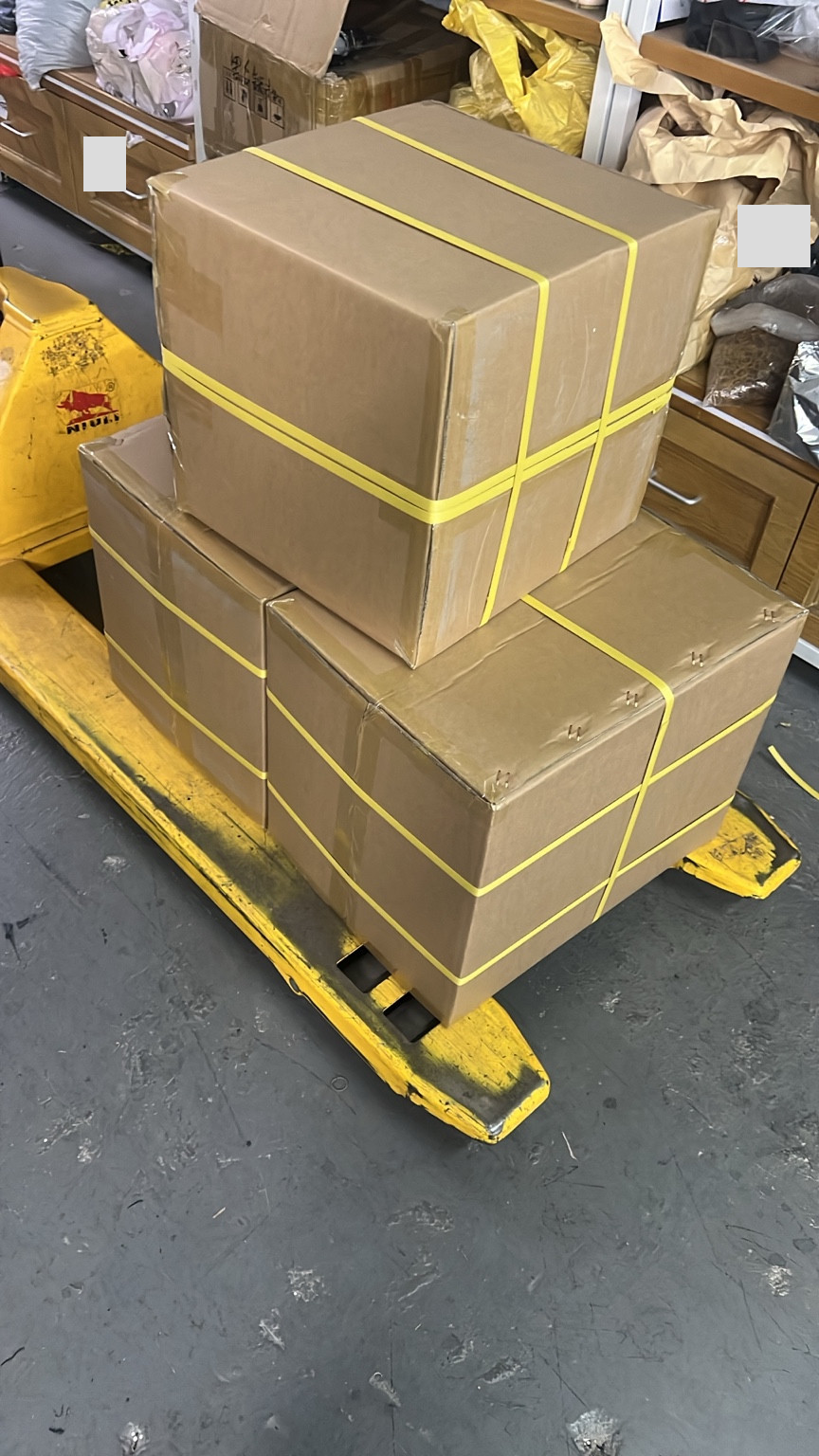
The umbrellas were packed, but the air-freight plan needed another check
This order was for a customer in France. The customer needed the umbrellas urgently, and we were anxious to get them delivered.
In earlier discussions, the logistics provider had estimated roughly ten days or a little more from dispatch in Guangzhou to receipt by the customer. We had been considering a direct flight to France from Guangzhou or Hong Kong.
When we contacted the logistics provider that evening to arrange shipment, we received different information.
According to the provider at the time, direct-flight capacity was tight, and local delivery timing in France was uncertain. They had emailed their French partner and were waiting for a reply.
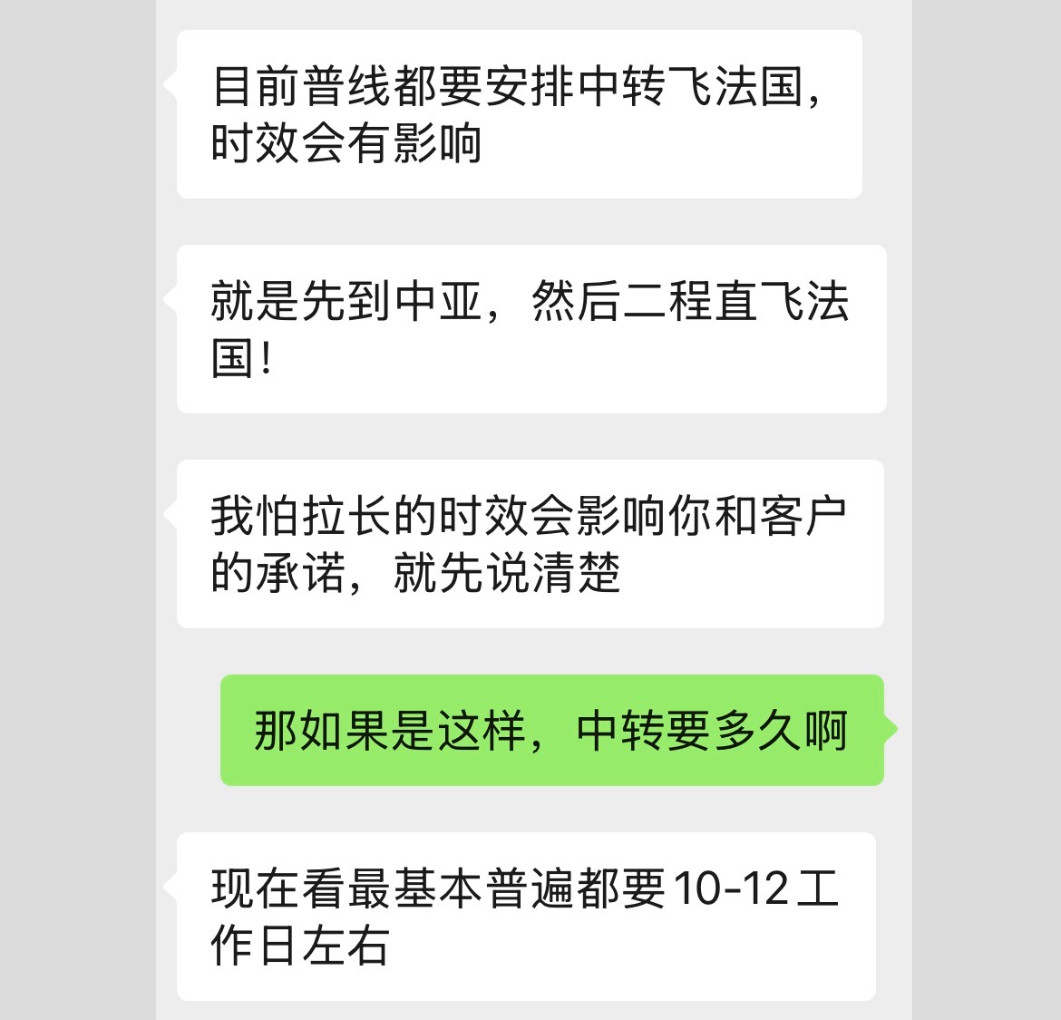
One set of messages also described a regular France service involving a transfer: first to Central Asia, followed by a second flight to France.
This was an alternative route described by the logistics provider. It did not mean that the route had been selected for our shipment, that space had been booked or that the goods had departed.
The goods were ready, but the original transport estimate had become less certain.
Different transit estimates should not become one delivery promise
The conversations included several time estimates. They could help us compare options, but each needed to retain its original context and conditions.
| Estimate | Context | How to interpret it |
|---|---|---|
| Roughly ten days or a little more | The earlier estimate from dispatch in Guangzhou to receipt by the customer | A reference for the original plan, not a delivery guarantee after conditions changed |
| About 10–12 working days | The provider’s reference estimate for the transfer service being discussed | Keep the unit as working days and confirm the starting point, stages covered and applicable conditions |
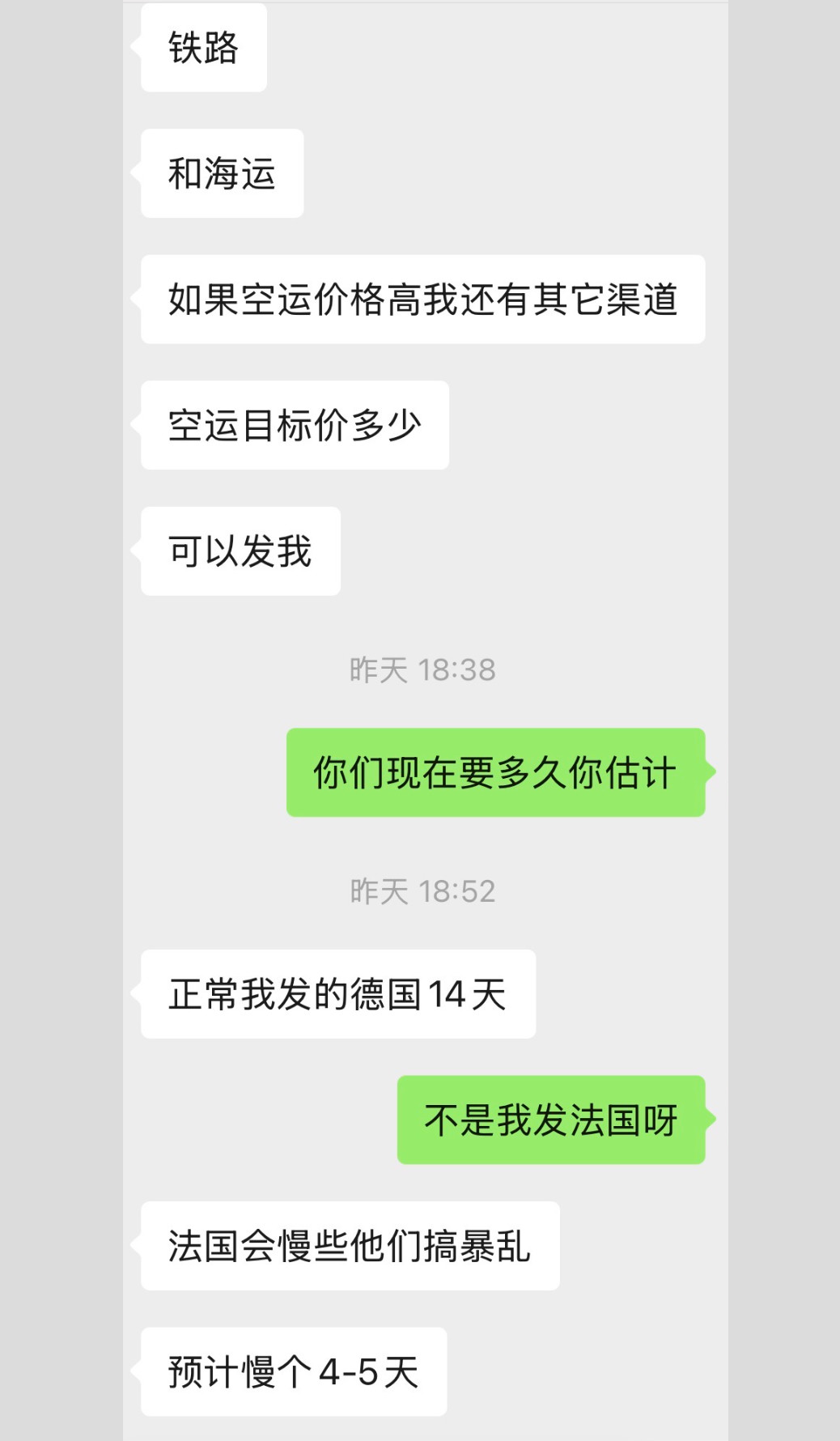
| Normally about 14 days for Germany, with France estimated to take another 4–5 days | An experience-based comparison in a separate logistics conversation | Not a confirmed transit time for this French shipment; it should not be converted into a promise of delivery in 18–19 days |
“10–12 working days” should not be rewritten as “10–12 days.” Without confirmation, it should not be assumed to cover the entire period from handing the goods to the logistics provider to customer receipt.
Before comparing the options, we still needed to ask:
- Does the estimate begin at handover, warehouse receipt or flight departure?
- Does it mean arrival in France or delivery to the customer?
- Have the route and available capacity been confirmed?
- What still needs to be checked about local delivery in France?
Show the customer the actual production status
The customer was understandably concerned and had asked whether the goods were still unfinished.
I sent photos of the packed goods so the customer could see the progress. I also explained production and transport as separate stages.
| Item | Status at the time of this account |
|---|---|
| Umbrella production and packing | Completed |
| Communication about readiness | Packing photos sent to the customer |
| Shipping route | Viable options still being checked and compared |
| Delivery date for this shipment | No new timing confirmed that we could commit to the customer |
The goods were ready. The outstanding task was to arrange transportation.
Since we were helping the customer arrange shipping, simply saying that it was a logistics problem would not have been enough. The customer needed the umbrellas, and we wanted the products we had made to reach them as soon as possible.
Keep working on what can be confirmed
We can closely monitor production, product quality and packing. Available air-freight capacity, transfer connections and destination delivery are not matters a factory can determine on its own.
Even so, there are practical steps we can continue taking.
Verify the information. Separate preliminary advice, questions awaiting a reply and confirmed conditions.
Compare the options. Check whether different routes are actually available instead of choosing only by the shortest quoted number of days.
Share progress. Tell the customer what has been completed and which transport details still need confirmation.
Make careful commitments. Urgency does not make an unconfirmed date reliable enough to promise.
Useful communication gives the customer a clear picture of the goods, the work underway and the remaining uncertainties.
Questions about this France-bound umbrella order
Why was there no new confirmed delivery date when the goods were already packed?
Production and transport require separate confirmations. For this order, the route, available capacity and destination delivery still needed checking. Packing photos could not replace those confirmations.
Can we tell the customer about the provider’s estimate of 10–12 working days?
Yes, as a reference estimate supplied by the logistics provider, not a delivery guarantee for this shipment. The starting point, stages covered and applicability to the final route still need to be confirmed.
Is a transfer route necessarily faster than waiting for a direct flight?
We could not determine that from the information available. The transfer service was one alternative under discussion. A comparison needed to consider available space, connecting flights and onward delivery, rather than the route description alone.
Do packing photos prove that the goods have been shipped?
No. They can show packing and readiness, but cannot by themselves prove handover to a carrier, flight departure or delivery.
Follow through after production
Making a good umbrella already involves a great deal of attention to the product, quality and production schedule. Export orders also require us to follow changes in transport arrangements and destination logistics.
This experience reminded me to confirm transport conditions earlier, allow room for changes where possible and prepare alternatives.
The umbrellas were packed. Our next step was to continue checking viable routes and transit estimates with the logistics provider and keep the customer updated.
The customer was waiting for the goods, and we would keep working on the arrangements. We should not promise a date that has not been confirmed, but we can continue moving forward on the matters within our reach.
This account is based on my actual communications about a French customer’s umbrella order, logistics messages and packing photos. The routes and transit estimates described were supplied by the contacts involved in those conversations; they do not represent all services to France. At the time recorded here, the revised shipping arrangements and delivery date for this shipment were still awaiting confirmation.