
Umbrella Material Guide for B2B Buyers
Nylon vs. Polyester vs. Pongee: Which Umbrella Fabric Should You Choose?
The canopy fabric affects an umbrella’s appearance, hand feel, printing result, cost, lead time, and position in the market. This practical comparison explains what importers, promotional buyers, distributors, and brands should confirm before approving a custom umbrella order.
Why umbrella fabric names can be confusing
Nylon and polyester are fiber families. Pongee, however, describes a fabric construction and finish rather than a separate modern fiber category. In today’s umbrella sourcing market, most fabric sold as “pongee” is polyester pongee. A supplier quotation should therefore state the fiber content, fabric density or yarn specification, coating, color, and performance requirements—not simply “pongee.”
The same fabric name can cover different quality levels. Yarn quality, weave density, fabric weight, dyeing, water-repellent treatment, UV or blackout coating, and finishing all change the final result. Buyers should compare approved samples and written specifications rather than judging quality from one label or one number.
01 · Traditional premium option
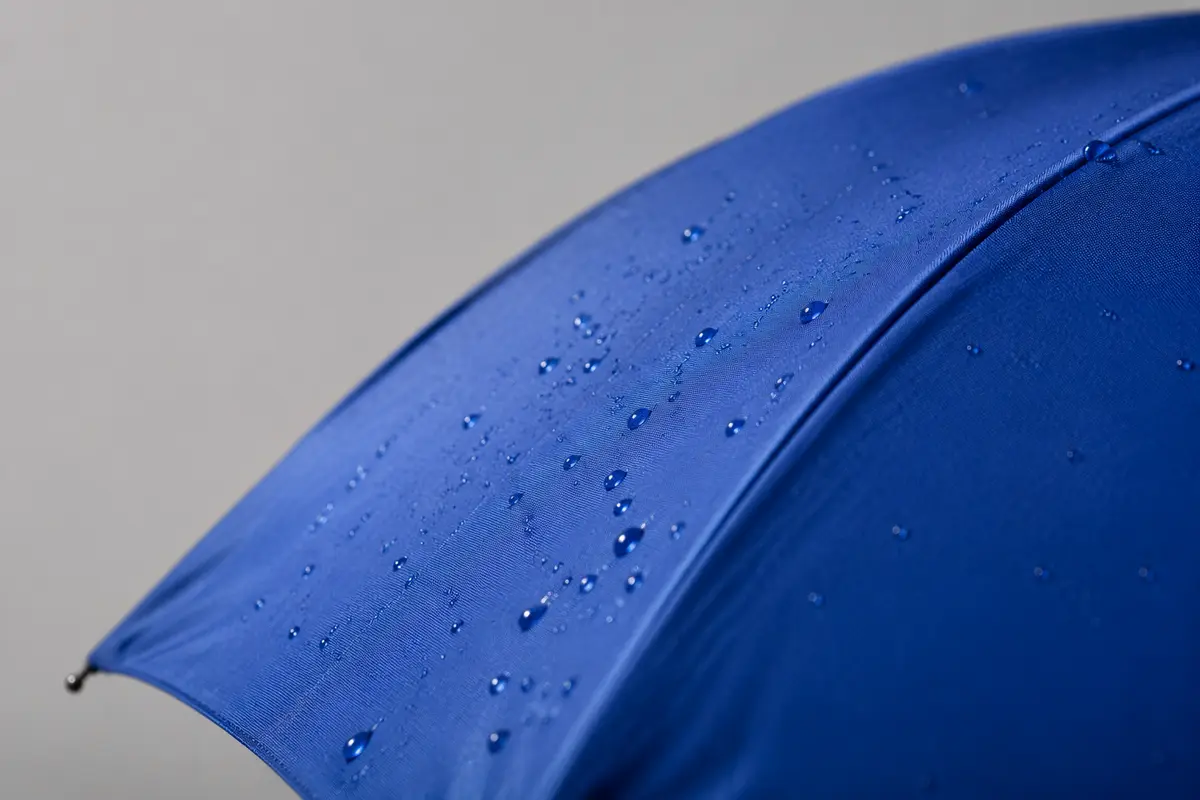
Nylon umbrella fabric
Nylon was widely used on higher-grade umbrellas in earlier decades. It can produce a smooth, crisp canopy with a noticeable sheen and good visual color depth. Its toughness and flexible hand can still suit selected fashion, specialty, or specification-driven umbrellas.
Where nylon can work well
- Projects requesting a smooth, slightly lustrous appearance
- Specialty designs based on an approved nylon sample
- Orders where the buyer has a defined fiber-content requirement
Buyer caution: nylon can absorb more moisture than polyester and may show greater dimensional change under wet and humid conditions. Availability, color choice, and cost should be confirmed before sampling.
02 · Cost-effective volume choice
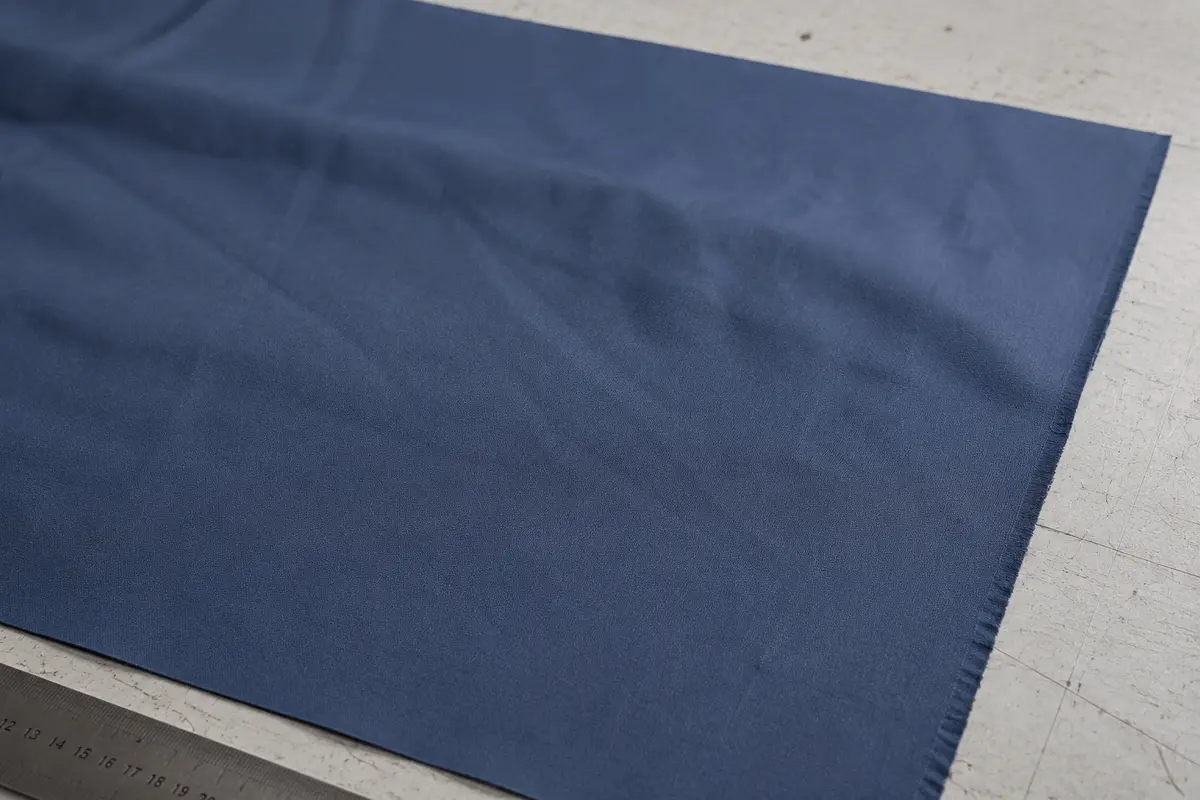
Standard polyester umbrella fabric
Polyester became the mainstream umbrella canopy material because it combines stable supply, practical durability, broad color availability, print compatibility, and competitive cost. It is widely used for promotional umbrellas, retail programs, events, giveaways, and large-volume orders.
Where standard polyester works well
- Budget-controlled promotional and advertising projects
- High-volume orders needing repeatable colors and supply
- Screen printing, heat transfer, and many all-over print programs
Buyer caution: “polyester” alone is not a complete specification. Low-density or lightweight cloth can look thin and feel inexpensive. Confirm the construction, weight or density standard, coating, colorfastness, and approved production sample.
03 · Refined mainstream upgrade
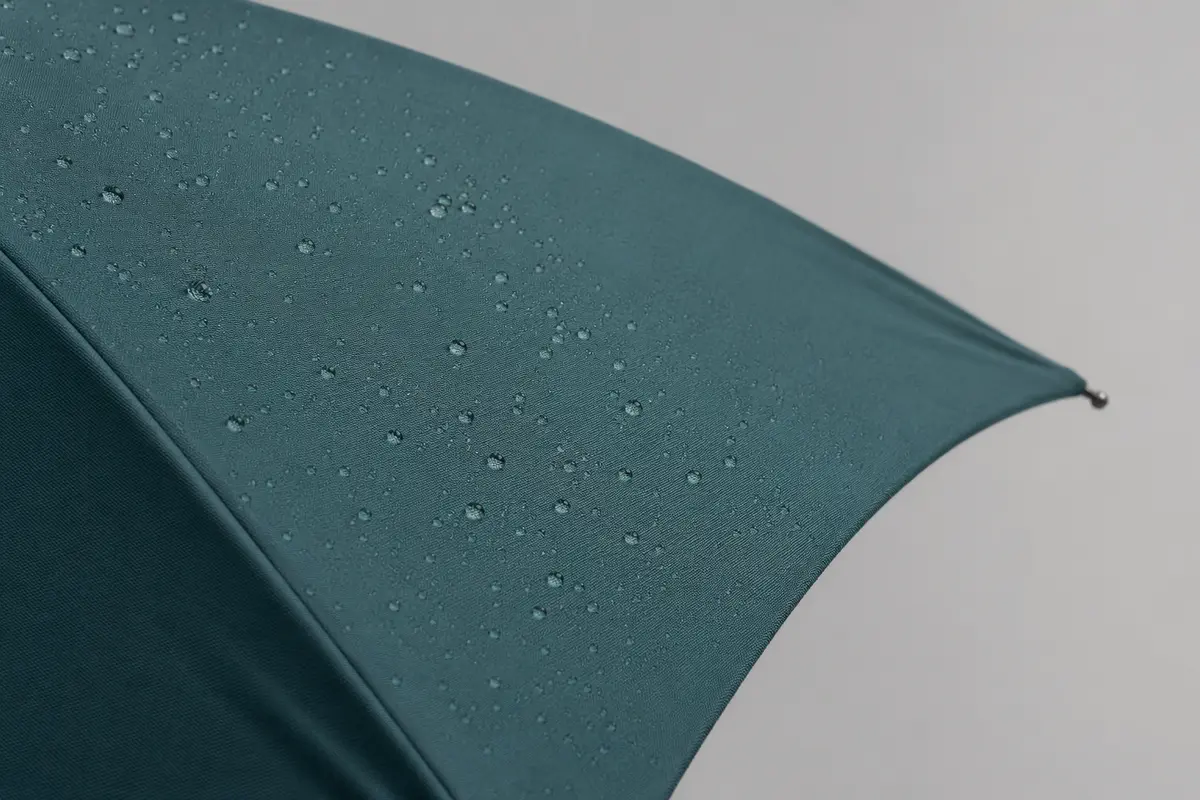
Polyester pongee umbrella fabric
Polyester pongee is commonly selected when the buyer wants a denser, softer, and more refined canopy than basic polyester taffeta. It usually has a smoother, semi-matte appearance and a fuller hand, which makes it popular for corporate gifts, branded merchandise, golf umbrellas, premium promotional umbrellas, and better retail lines.
Where polyester pongee works well
- Corporate gifts and brand programs where perceived quality matters
- Umbrellas requiring a softer, less shiny canopy appearance
- Projects needing rich stock-color options and efficient sourcing
Buyer caution: pongee is not automatically premium. A loosely woven or underweight pongee can still perform poorly. Ask for the full specification and inspect a physical sample under natural light.
Side-by-side sourcing view
Umbrella fabric comparison table
| Buying factor | Nylon | Standard polyester | Polyester pongee |
|---|---|---|---|
| Typical appearance | Smooth, crisp, more lustrous | Crisp, practical, moderate sheen | Softer, denser, semi-matte |
| Typical market position | Specialty or specification-led | Entry to mid-range volume orders | Mid-range to premium branded orders |
| Cost tendency | Often higher or less predictable | Usually most economical | Usually above basic polyester |
| Supply and colors | Confirm before sampling | Broad and stable | Broad, with many umbrella stock colors |
| Best-fit projects | Fashion and specialty umbrellas | Promotions, events, volume retail | Corporate gifts, brands, golf, premium promotions |
| Main check | Moisture response and availability | Density, weight, and finish | Full construction—not the word “pongee” alone |
This table describes common sourcing tendencies, not a universal performance guarantee. The approved sample and written specification control the order.
Before placing an order
What should a buyer put in the fabric specification?
- Fiber and construction: nylon, polyester taffeta, or polyester pongee.
- Density or yarn specification: for example 190T or 210T where applicable. Do not compare “T” and “D” as if they measured the same property.
- Fabric weight: confirm the supplier’s measurable standard when hand feel is important.
- Coating and performance: water repellency, PU, silver, black coating, UV protection, or other required treatment.
- Color and printing: stock color or custom dye, Pantone target, print method, artwork size, and color tolerance.
- Testing and approval: sample sign-off, colorfastness, UPF or light-transmittance tests where claimed, and pre-shipment inspection.
Our practical recommendation
For most price-sensitive promotional programs, start with a properly specified standard polyester. For corporate gifts, branded merchandise, and projects where hand feel and presentation influence the buyer’s perception, polyester pongee is usually the safer starting point. Choose nylon when its specific look, touch, or technical requirement is intentional—not simply because it was historically considered premium.
Send your target umbrella style, order quantity, market position, logo artwork, color, and budget. We can prepare comparable fabric options and samples so you can evaluate the difference before mass production.
Frequently asked questions
Umbrella fabric FAQ
Is pongee better than polyester?
Pongee is usually not an alternative fiber to polyester. In modern umbrella sourcing it normally means polyester pongee. A good polyester pongee often feels denser and softer than basic polyester taffeta, but the actual specification and approved sample determine quality.
Is 210T always better than 190T?
210T indicates a higher thread-count construction than 190T under a comparable supplier standard, but it does not guarantee better yarn, heavier fabric, stronger coating, or better finishing. Compare physical samples and complete specifications.
Which fabric is best for custom logo umbrellas?
Standard polyester suits many cost-sensitive screen-printed promotions. Polyester pongee is often chosen for corporate gifts and premium branding. The best option also depends on print method, artwork coverage, color, coating, order quantity, and budget.
Does water beading prove that an umbrella is waterproof?
No. Water beading shows a surface water-repellent effect. Canopy performance also depends on coating, weave, seams, sewing, and test conditions. Agree on the required test method before production.