
Wooden umbrella handle delay: when a critical umbrella component is delayed, the best response is not to keep waiting for another verbal promise. Confirm the actual completed quantity, arrange a partial shipment, reschedule assembly, give the buyer a verified recovery plan, and prepare a backup source.
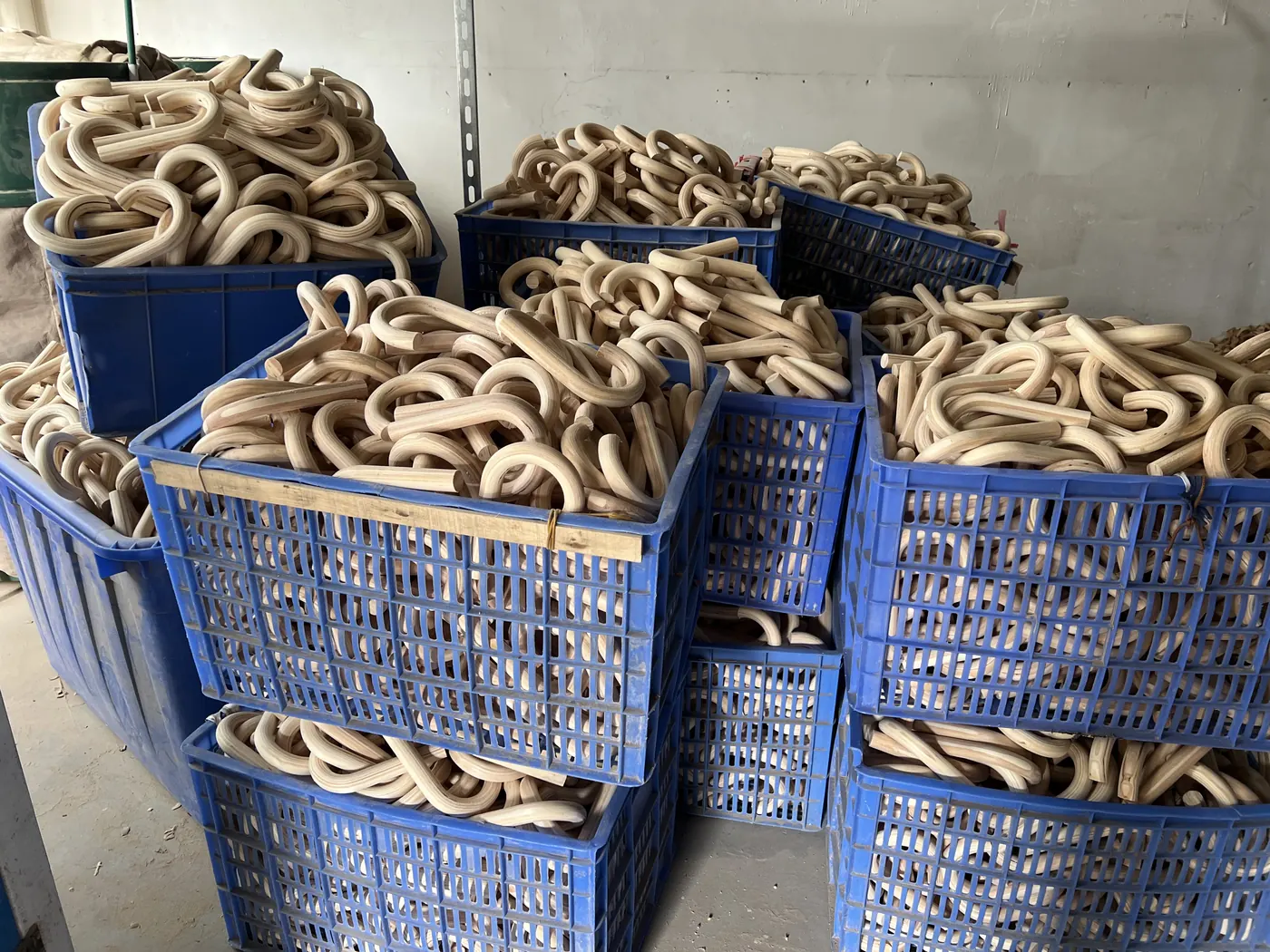
A recent delay involving curved wooden umbrella handles reminded our team that a low-cost component can still control the delivery date of an entire custom umbrella order. The handles were only one part of the product, but without them the umbrellas could not pass final assembly or ship.
We eventually recovered the first 600 units through an on-site inspection, split delivery and same-day assembly. The recovery also required two trips of more than 200 kilometers and added over RMB 2,000 in travel, labor and overtime costs.
This case produced five practical supply chain lessons for custom umbrella buyers and manufacturers.
Case Scope and Information Boundaries
This guide describes Hand in Hand Umbrella’s response to one delayed wooden-handle order. The quantities, dates, travel and additional costs relate to this case, rather than a standard lead time or recovery commitment for other orders. The shipment described here was the first 600 umbrellas; it should not be read as confirmation that the remaining quantity had also been completed or delivered. Any partial shipment or alternative component must be agreed for the specific buyer, specification and delivery requirement.
What happened to the wooden umbrella handle order?
The wooden handles were ordered on July 15. Because the design required consistent shaping, surface quality and wrist-strap components, the original plan was to receive them by August 10 and complete umbrella production around August 20.
The buyer later moved the required delivery date forward to August 30, removing most of the available buffer.
| Production milestone | What actually happened |
|---|---|
| July 15 | Wooden umbrella handles ordered |
| August 10 | Original expected arrival date |
| Around August 20 | Original target for completed umbrellas |
| Mid-August | Supplier repeatedly said the handles were “almost ready” |
| August 20 | Supplier reported a factory relocation and requested another week |
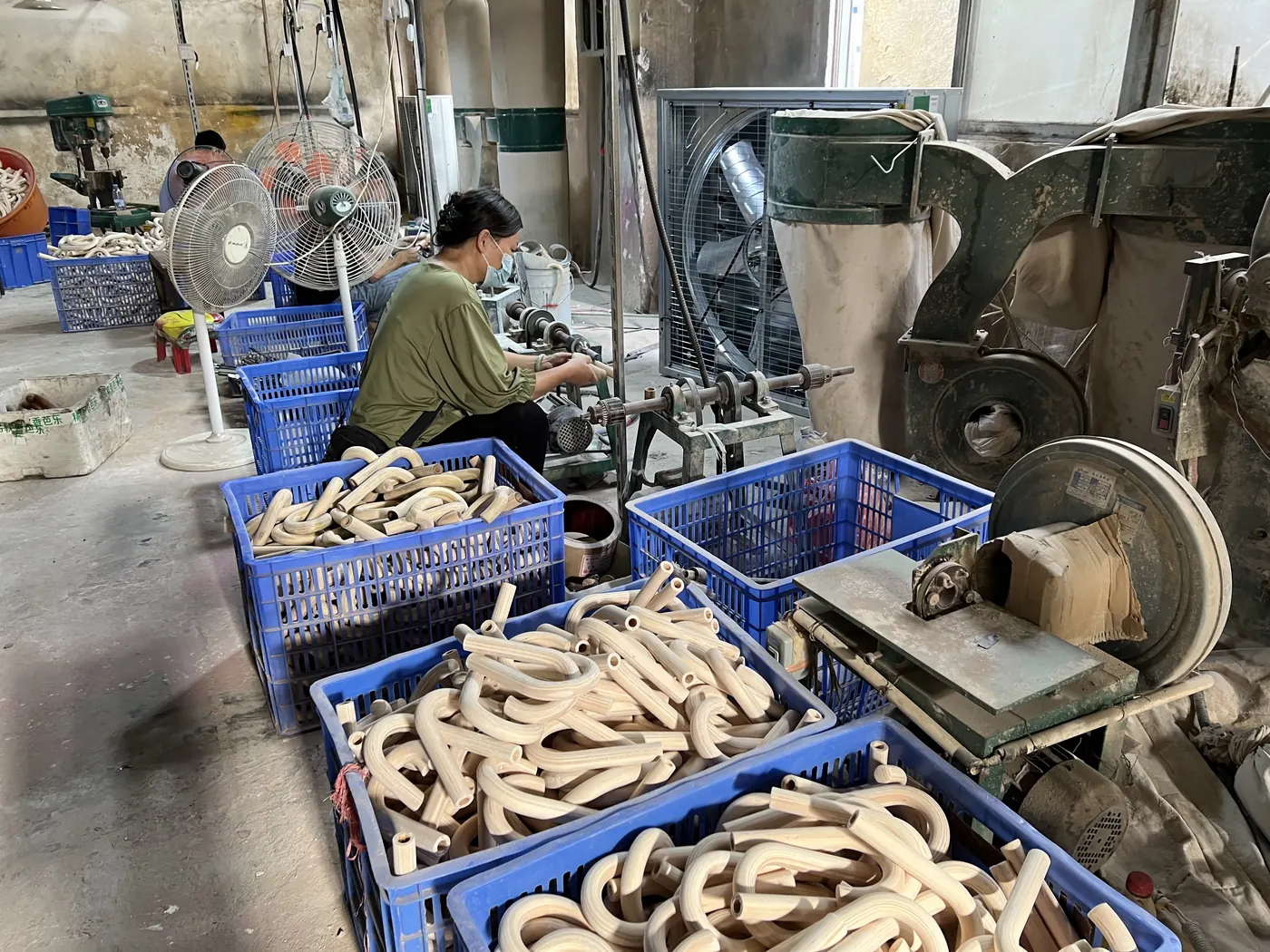
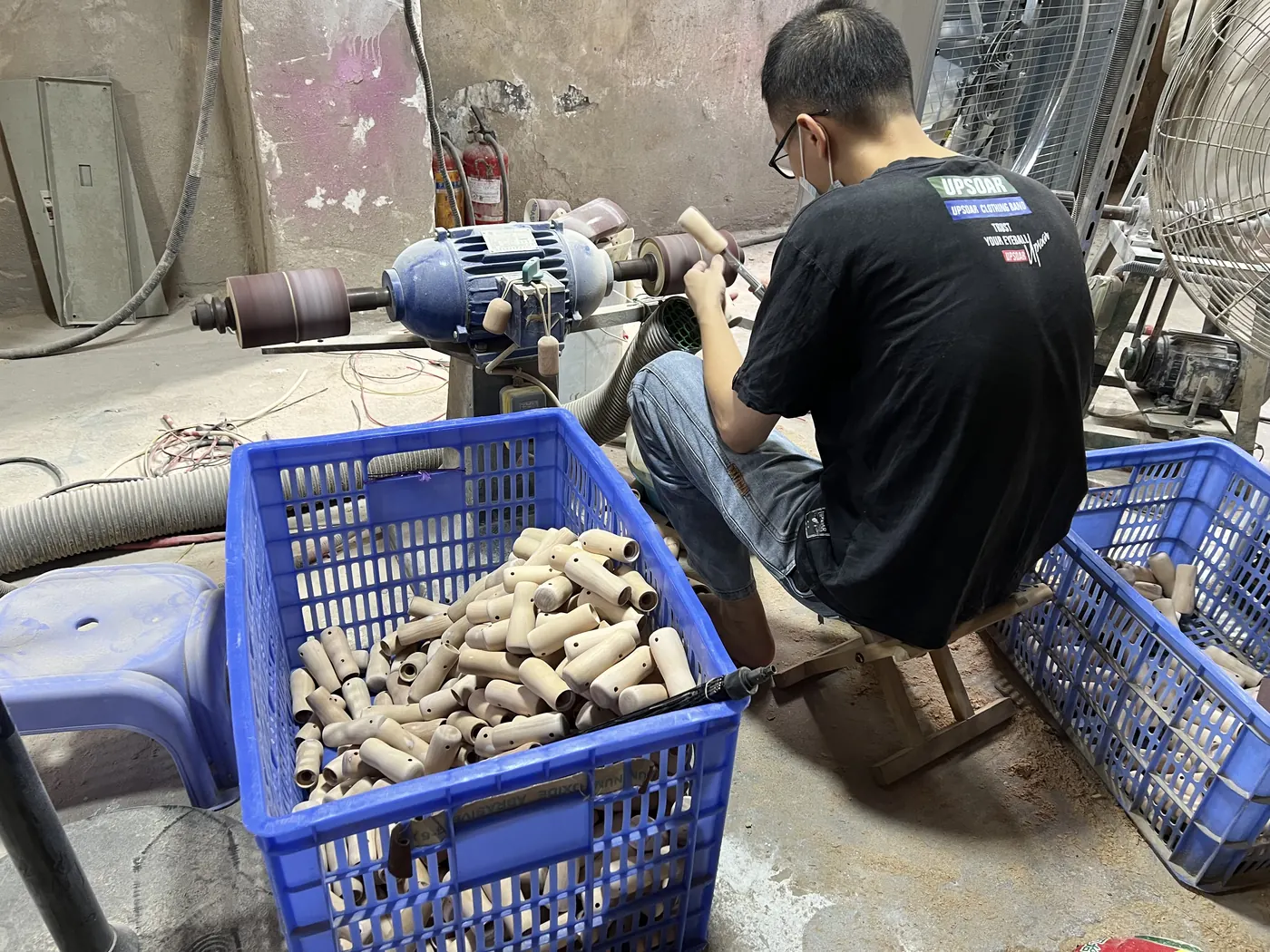
| On-site inspection | We drove more than 200 km and found most handles unfinished |
| Third day | The first 600 handles were completed |
| Same day the 600 arrived | We installed them and shipped 600 umbrellas first |
| Recovery process | A second long-distance trip was required to follow the remaining production |
| Additional cost | More than RMB 2,000 in travel, accommodation, tolls, overtime and extra labor |
The most serious cost was not the fuel or hotel bill. The delay disrupted the umbrella factory’s assembly schedule, created overtime, compressed the buyer’s delivery window and transferred the supplier’s production problem to our own team.
How can one small component delay an entire umbrella order?
A custom umbrella is a coordinated system of components and processes. The canopy fabric, ribs, shaft, handle, tips, wrist strap, printing and packaging may come from different specialist suppliers.
A wooden handle may represent only a small percentage of the purchasing value, but it sits on the final assembly path. Without the handle, an otherwise finished umbrella cannot be completed, inspected, packed or shipped.
This is why supply chain risk should not be ranked by component price alone. Buyers should also ask:
- Can the component stop final assembly?
- How many qualified suppliers can make it?
- How long would re-sampling and approval take?
- Is the color, shape or finish difficult to reproduce?
- Can a substitute be accepted without changing the approved sample?
- What happens to the delivery schedule if it arrives seven days late?
A low-value component with no immediate substitute can be more dangerous than a higher-value material that is widely available.
What supply chain problems did the delay expose?
1. A promised delivery date is not the same as verified production progress
The supplier repeatedly said the goods would be ready “tomorrow” or “in a few days.” The actual workshop situation did not support those claims.
For a time-sensitive order, progress should be supported by evidence: raw materials on site, work-in-progress quantities, current production photos, daily output and packed quantities. A verbal promise should not be used as the only basis for an export delivery commitment.
2. Monitoring only the final delivery date reveals problems too late
If the factory waits until the final due date to check a critical component, there may be no time to recover.
Important components need intermediate checkpoints, such as raw-material confirmation, first-piece approval, first-batch completion, 50% completion and final packing. Each checkpoint should have a date and visible evidence.
3. A smaller order may not receive production priority
Our handle order was important to the umbrella order, but it was not necessarily a large order for the handle supplier. During capacity shortages, factory relocation or large-customer insertions, smaller jobs can be moved back.
This does not excuse a missed commitment. It means the umbrella manufacturer must include supplier capacity and order priority in its risk planning.
4. A concentrated supplier base creates a single point of failure
Only a limited number of suppliers can consistently produce this type of curved wooden umbrella handle to the required finish. Changing factories after a delay would require new samples, color matching and process approval.
When a component is difficult to replace, a tested secondary supplier and a longer safety period become more important.
What should an umbrella factory do when a component is delayed?
Verify the real completed quantity immediately
Do not ask only, “When will everything be finished?” Confirm:
- whether all raw materials are available;
- the exact completed quantity;
- the actual daily output;
- which process has not started;
- how many units can ship immediately;
- whether relocation, power supply, labor shortages or priority changes are affecting production.
Photos, live video or an on-site inspection may be necessary for a critical order.
Use partial delivery as a recovery tool
Once the first 600 handles were ready, we did not wait for the balance. We transported them to our umbrella factory, adjusted the assembly schedule and shipped the first 600 umbrellas that day.
Split delivery can protect an important event, store opening or project deadline. It is more effective when the minimum urgent quantity and partial-shipment method are discussed before production begins.
Reschedule internal assembly before the components arrive
A supplier recovery plan is incomplete if the umbrella factory is not ready to receive the first batch. Assembly workers, quality inspection, packing stations and overtime need to be arranged in advance.
The goal is to avoid a second delay inside the umbrella factory after the late component finally arrives.
Give the buyer an executable plan
Buyers need verified quantities and dates, not repeated statements that the factory is “pushing the supplier.”
A useful update should include:
- the quantity already completed;
- the quantity that can ship first;
- the next confirmed production milestone;
- the expected date of the following batch;
- the corrective action currently in progress.
Record the full recovery cost
Travel, tolls, accommodation, extra transportation, overtime and additional labor are real delay costs. They may not all be recoverable from the supplier, but they should influence future quotations, supplier ratings and production buffers.
Five supply chain lessons from the wooden handle delay
1. Give critical components a longer safety lead time
Special processes, limited suppliers, difficult substitution and small supplier-side order value all increase risk.
Safety time should be based on historical supplier performance, process difficulty, transport distance and backup availability—not one standard buffer for every component.
2. Use evidence-based production checkpoints
A practical checkpoint plan for critical umbrella components can include:
- raw materials and accessories confirmed;
- first piece or first batch completed;
- 50% of the order completed;
- quantity available for early shipment confirmed;
- full completion and dispatch confirmed.
Each checkpoint should include a date and evidence connected to the actual order.
3. Design split delivery before a problem occurs
Before production, define the smallest useful first quantity, the buyer’s earliest required quantity and whether the umbrella factory can assemble and pack in batches.
When this has already been agreed, a delay does not require the entire recovery plan to be negotiated from zero.
4. Keep the qualified supplier, but build a second option
We still recognize the handle supplier’s product quality. In some cases, accepting a higher cost or longer planned lead time is better than sacrificing the approved finish.
However, a long relationship does not remove delivery risk. A secondary supplier can be tested through samples, small batches or non-urgent orders until it becomes a reliable alternative.
5. Score suppliers on more than price and quality
A useful supplier scorecard should include:
| Evaluation area | Questions to record |
|---|---|
| Quality | Does production consistently match the approved sample? |
| Delivery | Are promised dates realistic and normally achieved? |
| Communication | Does the supplier warn the factory before a delay becomes critical? |
| Progress accuracy | Do photos and completed quantities match what is reported? |
| Recovery ability | Can the supplier support overtime, partial delivery or expedited transport? |
| Repeat risk | Has the same delay pattern happened on earlier orders? |
A supplier with strong quality but unstable delivery may remain usable, but the order needs more buffer, closer checkpoints and a backup plan.
Buyer checklist for critical custom umbrella components
Before placing the order
- Identify every component that can block final assembly.
- Ask whether the supplier is relocating, stopping production or carrying a major backlog.
- Set separate dates for the first batch and final batch.
- Add longer safety time for rare or custom components.
- Confirm whether a qualified secondary source exists.
During production
- Request order-specific photos or video at agreed milestones.
- Confirm completed quantities instead of accepting “almost finished.”
- Escalate when the warning date is reached without visible progress.
- Prepare partial transportation when a usable batch is available.
- Keep the umbrella assembly and packing plan synchronized.
After a delay
- Verify the facts before promising the buyer a new date.
- Calculate recoverable daily output and the latest workable dispatch date.
- Protect the buyer’s most urgent quantity first.
- Record added logistics, labor and travel costs.
- Review the supplier rating and the next order’s safety lead time.
Frequently asked questions
What should a buyer do when an umbrella component is delayed?
Ask the umbrella factory for the completed quantity, daily output, photographic evidence, first available shipment quantity and a dated recovery plan. Where possible, prioritize partial assembly and split shipment instead of waiting for the whole order.
Should an umbrella factory continue using a high-quality supplier that often delivers late?
It may continue if the component is difficult to replace and the quality is important, but the management method must change. Use a longer buffer, more checkpoints, partial delivery requirements and a tested secondary supplier. Repeated delays without improvement should reduce order concentration.
Are split shipments worth the additional cost?
They can add transport and handling cost, but often cost less than missing an event, promotion or project deadline. The decision should compare the buyer’s urgent quantity, freight cost and the commercial impact of a full-order delay.
Can a contract completely prevent component delays?
No. A contract can define dates and responsibility, but it cannot replace production visibility. Checkpoints, verifiable quantities, supplier capacity checks and backup sources are still required.
Which umbrella components require the closest monitoring?
Any component that blocks final assembly, has a long customization cycle, comes from few suppliers or cannot be replaced quickly. Examples include special handles, custom frames and shafts, custom-dyed canopy fabric, wrist straps, branded packaging and custom metal fittings.
Final takeaway
Mature umbrella supply chain management does not mean that delays never occur. It means risks are identified early, progress is verified with evidence and the factory has a workable recovery path.
In this case, the first 600 umbrellas were shipped because the team combined on-site verification, split delivery, immediate rescheduling and overtime. The additional cost was real, but protecting the buyer’s deadline and trust was more important.
For buyers sourcing custom umbrellas from China, the key question is not only whether a factory can make the approved product. It is also whether the factory can identify supply chain risk, communicate verified information and take responsibility when a critical component does not arrive on time.