
By Chen Aihua | Hand in Hand Umbrella Factory, Guangzhou
What should you do if hotel umbrellas arrive with broken handles? Keep the damaged umbrellas and their original packaging, photograph the break and carton condition, record the carton numbers and transport reference, and count the affected units. Notify the supplier and carrier promptly. If the hotel needs umbrellas urgently, discuss repairs or replacement supply separately from the damage count and responsibility assessment.
A recent hotel umbrella order for a trading customer in Chongqing shows why these steps matter. We agreed on an emergency replacement arrangement, but the total number of damaged umbrellas and the stage at which the damage occurred still needed to be verified.
Case summary: what was confirmed and what remained open?
| Item | Case facts |
|---|---|
| Order and delivery | Hotel umbrellas supplied to a trading customer in Chongqing, China, and dispatched before the National Day holiday. |
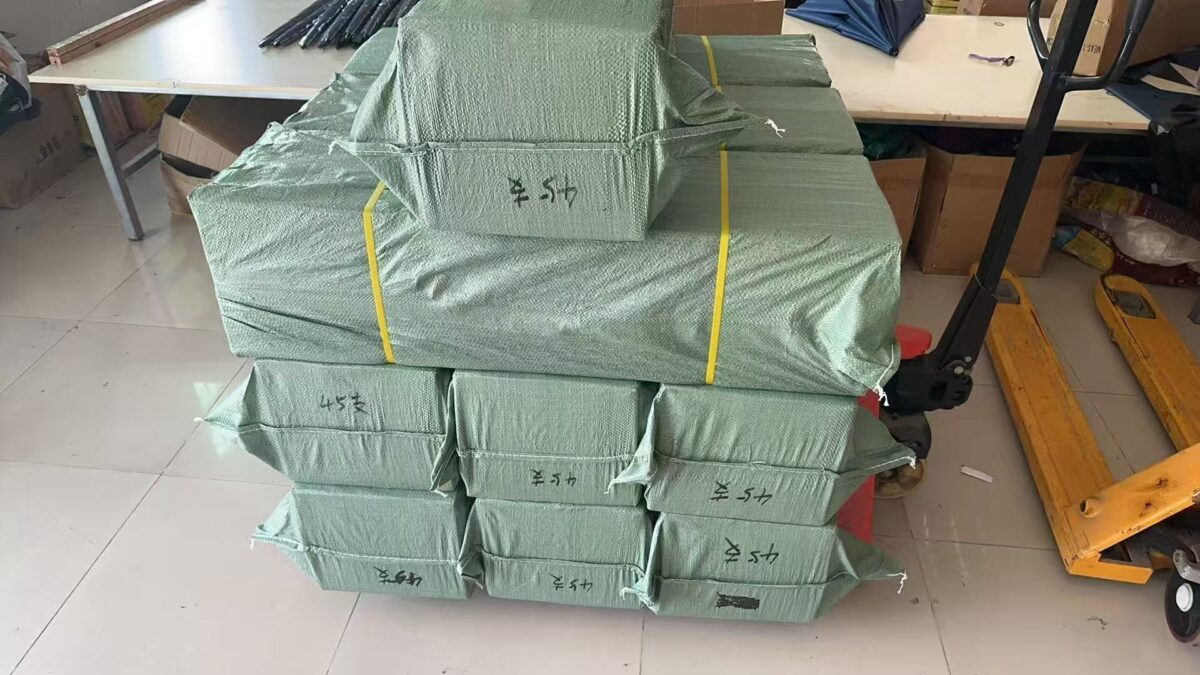
| Packing | 45 umbrellas per carton; thick cartons with an additional woven outer bag. |
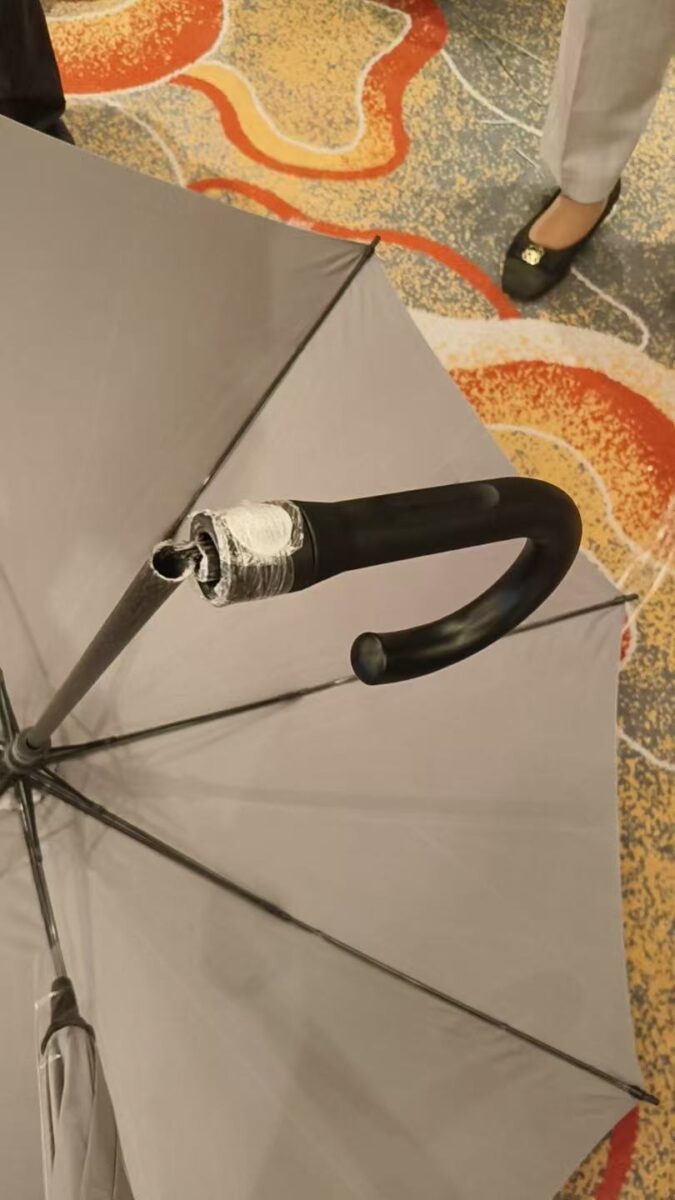
| Damage reported | The customer’s photos and videos showed two or three umbrellas with broken handles. The whole shipment had not been counted, so the total was unconfirmed. |
| Emergency arrangement | 20 replacement umbrellas were agreed: the customer would pay for 10 and the factory would cover the cost of the other 10. |
| Status | The agreement did not confirm that replacement delivery was complete, or establish responsibility for the damage. |
Important distinction: 20 was the negotiated replacement quantity—not a verified count of 20 damaged umbrellas. This was a domestic delivery case, not an international shipping claim.
What inspection and packaging had been used?
Before dispatch, we inspected each umbrella. We also used thick cartons and added woven outer bags at our own expense to provide an extra layer of protection during handling.
Seeing the customer’s damaged umbrellas was frustrating after that work. However, pre-dispatch inspection and stronger outer packaging are evidence to review, not proof that damage could only have been caused by the carrier. The handle connection, internal packing and transport handovers still needed examination.
Why could the cause of the broken handles not be confirmed?
The shipment had been waiting at the freight station for several days before collection. The hotel discovered the damage when it first opened the packaging on the collection day. The customer had not witnessed the handling, and there were no photographs covering the intermediate handovers.
Based on the fracture appearance and my manufacturing experience, I suspected a substantial external impact. For example, dropping a full carton from a height could subject the handles to a sudden load. That was a possible explanation, not an established account of what happened. The time spent at the freight station was not, by itself, evidence of the cause.
Without complete handling records, we could not identify the exact point of damage. A proper review needed the broken parts, carton condition, packing arrangement, opening records and transport documents.
For a separate explanation of loose handles and assembly methods, see our guide to umbrella handle fixing, hot-melt glue and two-part adhesives. A broken connection and a loose adhesive joint should not automatically be treated as the same failure.
How did we agree on 20 replacement umbrellas?
The hotel needed an answer, and the trading customer needed a practical way to continue the delivery. We first offered two options: return the damaged umbrellas for repair and resend them, or make replacements if repair was inconvenient.
The customer did not have time to inspect every umbrella and requested 20 replacements. We were concerned because the photographs showed only a few broken handles, while the actual count was still unknown. Making, packing and dispatching 20 umbrellas would involve real costs.
The customer had nominated the carrier, but that did not determine responsibility. We still needed evidence of the cause. The customer then proposed paying for 10 umbrellas while we covered the other 10, and we accepted.
The result was an agreed emergency supply plan, not a completed delivery or a finding of fault. This cost-sharing arrangement applied to this particular case; it is not a standard replacement policy for every order.
What should buyers and factories improve before the next shipment?
1. Check internal protection, not just the outer bag
Check whether handles touch the carton wall or each other, whether the umbrellas can move inside, and whether the cushioning and restraints suit the packed weight and structure. Put handling warnings on the outermost visible layer if a woven bag covers the carton. A warning label cannot replace physical protection.
DHL’s general packing guide recommends protecting individual items, separating them where needed and filling spaces that allow movement. These are useful review principles, not proof that a particular 45-umbrella carton meets an order-specific standard. The actual packing needs to be assessed for the intended transport conditions.
2. Connect inspection records with carton numbers
Match inspection records, internal packing photos, sealed-carton photos and carton identifiers. This helps both parties trace a complaint to the relevant batch. A dispatch photograph is useful, but it cannot replace records of later transport handovers.
3. Agree who collects and who opens the shipment
If the buyer cannot collect the shipment personally, ask the person collecting it to record the exterior packaging and transport label. Identify who will inspect the umbrellas at the hotel. Where opening at collection is impractical, agree on a workable inspection arrangement with the carrier in advance.
4. Separate the damage count from urgent replacement needs
Count damaged units as soon as possible. If emergency supply must be arranged first, record the unconfirmed count, requested replacement quantity, any extra spare umbrellas and the agreed costs separately. An urgent replenishment request is not a damage statistic.
Arrival inspection checklist for hotel umbrella orders
- Photograph the outer packaging, transport label and carton numbers at collection.
- Record collection time and the time of the first opening.
- Photograph or video the opening and the position of items inside.
- Count affected umbrellas and separate confirmed damage from uninspected stock.
- Keep broken parts, damaged umbrellas and original packaging for review.
- Notify the supplier and carrier promptly with the same evidence set.
- Confirm repair or replacement quantities, costs and timing in writing.
Frequently asked questions
What evidence should I provide when umbrella handles are broken on arrival?
Provide clear photos of the break, outer packaging, carton numbers and transport label, together with collection and first-opening times. Count the damaged units and keep the umbrellas and packaging available for inspection.
Does pre-shipment inspection prove that the carrier caused the damage?
No. It is one piece of evidence. The fracture, packing condition, opening records and handover information must also be reviewed. In this case, external impact was suspected, but the exact cause and stage were not confirmed.
Can emergency replacements be arranged before the final damage count?
A buyer can request this, subject to agreement with the supplier. Keep the requested quantity and cost arrangement separate from the verified damage count. Here, the agreed 20 replacements did not mean that 20 damaged umbrellas had been confirmed.
What if the shipment cannot be opened at the freight station?
Agree on a practical inspection process in advance, record the exterior at collection, and document the first opening at the destination. Prompt reporting and retained packaging give the parties more information to review; they do not automatically establish responsibility.
Planning a hotel umbrella order?
Discuss the handle structure, carton quantity, internal protection, collection arrangements and inspection process before dispatch. Review our umbrella quality control process and custom umbrella order process when preparing your requirements.
For us, this case was a reminder that careful manufacturing must be followed by equally clear packing and handover records. We chose to agree on a practical replacement plan while leaving the unresolved facts open for verification.