Direct answer: Custom umbrella sampling fees can cover much more than fabric and components. When an unusual shape or size has no ready-made pattern, the factory must develop cutting patterns, make a trial canopy, assemble the sample, check its open shape and repeat adjustments. In our square umbrella case, an unprinted sample with modest material costs still occupied the pattern maker and me from morning into the afternoon. Whether a fee is appropriate depends on the work required, not simply the number of samples. Agree the specification, development scope, revision arrangements, fee and feedback schedule before making the sample.
By Aihua Chen | Hand in Hand Umbrella Factory
Case Scope: What Happened, and What Is Not Confirmed?
This first-person account comes from our own umbrella sampling work at Hand in Hand Umbrella Factory. A buyer preparing a ball-game-related event wanted umbrellas for spectators and requested delivery to Paris, France, before the end of the month. The exact event, order quantity and calendar deadline are not disclosed.
We completed a trial sample and sent photographs and video, but had received no further substantive feedback when the original account was written. This is not a completed-order or delivery case. We did not charge a sampling fee on this occasion; that was a decision for this sample, not a promise of free custom development for every project.
Project at a Glance
| Item | What the case records |
|---|---|
| Intended use | Rain cover for spectators at a ball-game-related event, with attention to the space occupied beside other people. |
| Initial request | A 45 × 45 cm square umbrella. |
| Alternative considered | A 45 × 90 cm rectangular umbrella; after discussion, the buyer returned to a square design. |
| Revised target size | 85 × 85 cm. These are requested dimensions, not a published measurement report for the finished sample. |
| Development challenge | No existing paper pattern for the requested 85 × 85 cm specification. |
| Work involved | Cardboard pattern making, cutting, sample construction, open-canopy checks and several revisions. |
| Sampling charge in this case | No fee charged; the sample had no printing and material spending was modest. |
| Time invested | The pattern maker and I worked on the umbrella from morning into the afternoon. |
| Recorded status | Sample completed and images/video sent; further buyer feedback remained outstanding when the account was written. |
Why Did the Request Change from 45 × 45 cm to 85 × 85 cm?
The buyer wanted an umbrella that was neither too large nor too small and would not interfere with nearby spectators. We first sent pictures for a 45 × 45 cm square concept, which the buyer liked. The request then changed to a 45 × 90 cm rectangle. That option presented making difficulties, so after discussing it, the buyer chose a square again. A later email increased the requested size to 85 × 85 cm.
We have our own umbrella factory and regularly work on square and other unusually shaped umbrellas. However, experience with a shape does not mean a ready-made cutting pattern exists for every size. A changed dimension can change the actual work required.
The buyer also emphasized the urgent Paris arrival target and wanted a product with a good-quality appearance. Thinking about the event schedule, I agreed almost immediately when asked whether we could make a sample first. Looking back, I should have clarified the sampling arrangements before committing workshop time.
Why Did the Square Umbrella Need Repeated Pattern Adjustments?
The specific obstacle was the absence of a ready-made 85 × 85 cm pattern. Our pattern maker used cardboard to develop a cutting template, then turned that template into an actual canopy so we could see how it worked when opened.
- Make the pattern. Develop the canopy-panel cutting template around the requested dimensions.
- Cut and construct the trial sample. Use the pattern to cut material and make the umbrella canopy.
- Open the umbrella and inspect the result. Check the overall shape and how the canopy fits the structure.
- Revise and try again. Adjust the pattern or construction where the result is unsuitable, then make another check.
It was not a one-pass job. From morning into the afternoon, the pattern maker and I kept returning to the same umbrella: make it, open it, look at the result, identify a problem and adjust it. The sample was finally completed after several rounds. The account does not specify an exact number of trials.
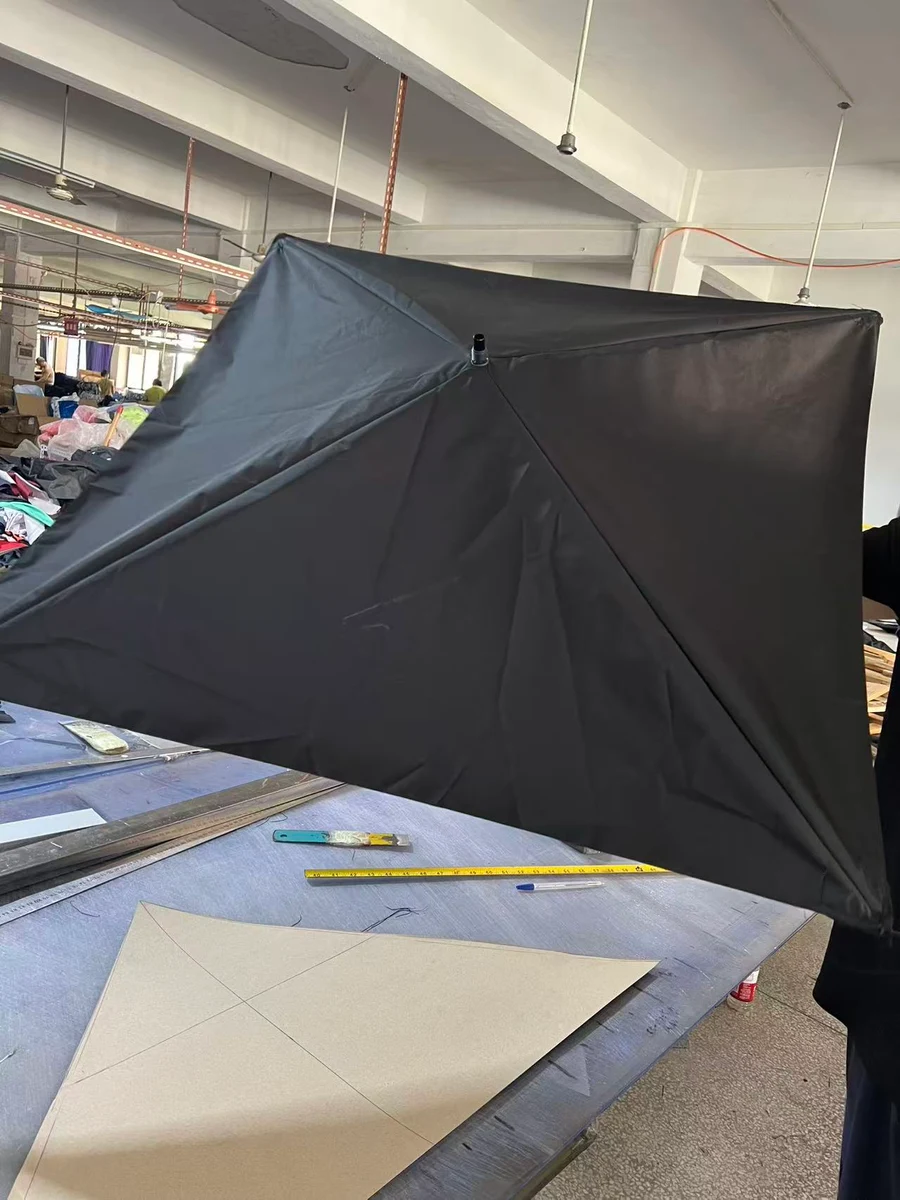
A prototype is a way to check whether a proposed specification works in practice; it is not merely a smaller version of a bulk purchase. This is why an apparently simple unprinted umbrella can require meaningful development effort.
What Does a Custom Umbrella Sampling Fee Actually Cover?
I did not charge for this sample because it involved no printing and the materials were not expensive. After the work was finished, however, the distinction between material spending and the total sampling effort was much clearer.
| Cost or effort | Work in this square umbrella case | What buyers should clarify |
|---|---|---|
| Pattern-making time | A new cardboard pattern for the requested specification. | Is an existing pattern suitable, or does a new one need to be developed? |
| Making and assembly labor | Cutting material, constructing the canopy and assembling the sample. | What sample construction is included in the quoted work? |
| Revisions and checks | Opening the umbrella, checking its shape and making repeated adjustments. | Which revisions are included, and how will specification changes be handled? |
| Project communication | Confirming requirements, taking photographs and video, and following up. | What needs approval, who will review it and when will feedback arrive? |
| Sample materials | Canopy fabric and other materials consumed during trial making. | Which materials and components will be used in the sample? |
The buyer sees one sample umbrella. Behind it are the pattern maker’s experience and a substantial part of the day spent by both of us. Whether a sample should carry a fee therefore depends on the development and making work, not only on the material bill.
This table explains the work involved; it is not a fixed price list or a statement that each item is always invoiced separately. For a general preparation checklist, see our custom umbrella sample guide.
Why Does Feedback Matter Even When the Buyer Does Not Order?
After completing the sample, I sent photographs and video through WhatsApp and asked for confirmation so that we could plan the next step. The buyer said they were busy and would contact me later. By the time I wrote the original account, subsequent emails and WhatsApp messages had not received a further response.
I felt frustrated and disappointed. We had responded to the urgency, arranged the pattern-making work and spent time adjusting the umbrella, but still did not know whether the sample was suitable or whether the project would continue.
That does not tell us why the buyer stopped replying. Their circumstances or event plans may have changed; we do not know. Having a factory make a sample does not mean the buyer must place an order. If the result is unsuitable, useful feedback identifies what needs to change. If the project is paused, a short update helps the factory plan its workload.
The lesson is about clear communication and respect for the work on both sides, not a claim that an unanswered sample request proves bad intent.
What Should Buyers and Factories Agree Before Sampling?
1. Confirm the Specification Before Workshop Work Starts
Agree the umbrella shape, target size, intended use, printing and quality requirements. If the requirement is still changing, discuss those changes before deciding when to start. For a square or rectangular canopy, confirm how the requested dimensions will be measured rather than assuming that a product picture establishes the finished size.
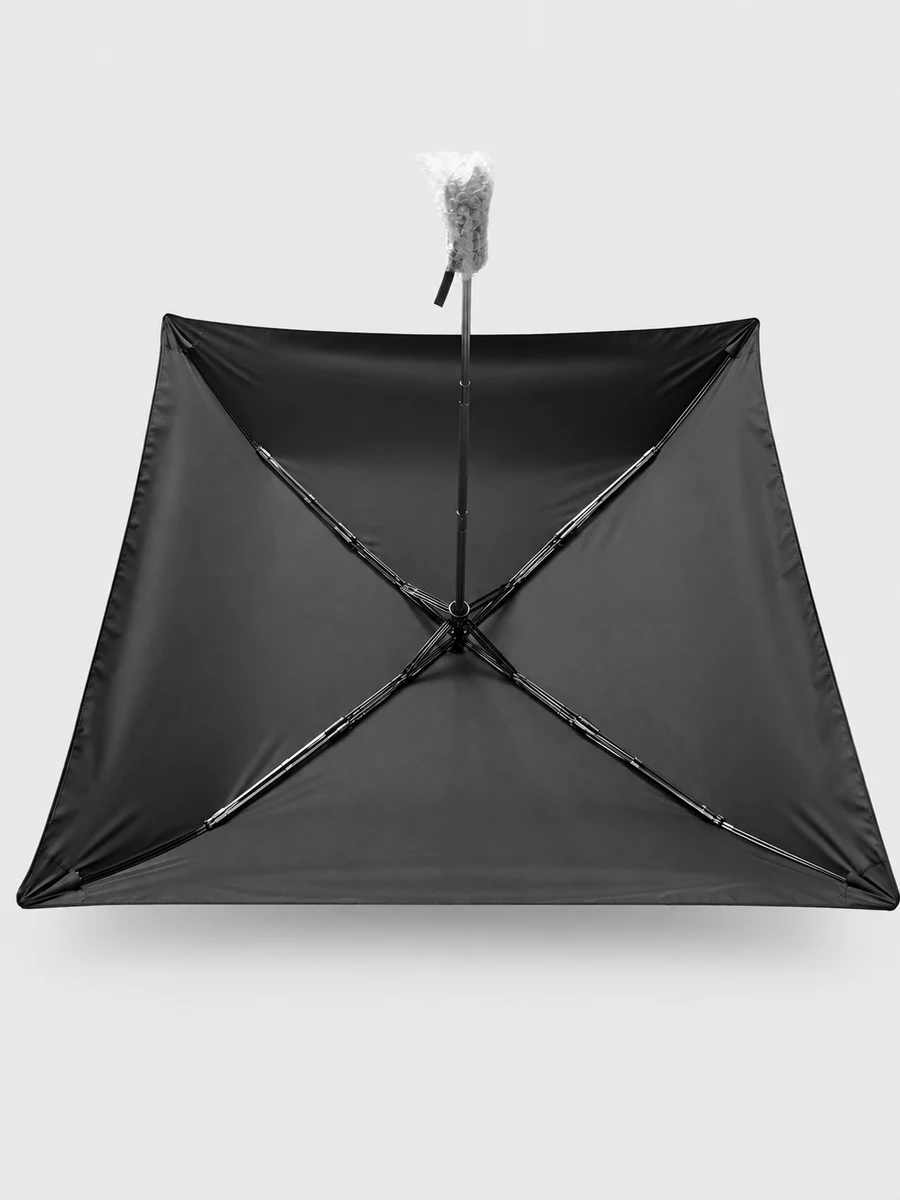
The reference below shows another square-umbrella construction. It helps illustrate why shape alone does not define every component or specification.
2. Explain the Development Scope and Fee in Advance
For work requiring a new pattern, a special structure or repeated adjustments, I will give more attention to a reasonable sampling charge and explain what it covers before starting. Buyers and factories should also agree how additional changes will be handled.
Whether a sampling fee can later be credited against an order should be discussed upfront. It is not an automatic entitlement or a fixed policy established by this case. More complex component projects may involve additional work, as explained in our guide to choosing a custom umbrella development partner.
3. Separate Sampling Time from the Bulk-Order Delivery Plan
A required arrival date is essential information, but sampling, buyer confirmation, bulk production and transport each take time. Check them separately before deciding whether the overall schedule is realistic. In this case, delivery to Paris before month-end was a requested target, not evidence that production or shipment occurred.
4. Agree Who Will Review the Sample and When
When sending sample images or video, identify the decisions that need confirmation and agree an expected feedback date. If the project changes or is paused, either side should communicate promptly so the next steps can be rearranged.
Buyer Checklist Before Requesting a Custom Umbrella Sample
- Confirm shape, dimensions and the measurement method.
- Explain the event or use environment and any space constraints.
- Specify the required construction, appearance, printing and quality expectations.
- Ask whether a suitable sample or cutting pattern already exists.
- Agree the development work, sample quantity and revision arrangements.
- Confirm any sampling fee and whether an order credit is available, with its conditions.
- Separate the sample schedule, approval time, production time and transport plan.
- Name the person approving the sample and agree a feedback date.
Frequently Asked Questions
Do all custom umbrella samples require a fee?
No. The arrangement depends on whether an existing sample or pattern is available, whether printing or other development is needed, and the actual making and revision work. Confirm the scope and any fee before work starts. Free sampling in one project is not a blanket policy.
Does changing a square umbrella size always require a new pattern?
Not always; it depends on the patterns already available and the requested specification. In this case, we had no ready-made pattern for the requested 85 × 85 cm umbrella, so a new cardboard pattern and several adjustments were needed.
Must I place a bulk order after receiving a sample?
No. Sampling helps a buyer assess the result and decide whether to continue. A request for feedback is not an obligation to order. Tell the supplier whether the sample needs changes or the project has been paused. Any sampling charges should follow the terms agreed beforehand.
Does charging a sampling fee mean the factory offers poor service?
No. Careful service and a reasonable charge for development work can coexist. A clear scope, agreed cost, realistic timing and useful feedback allow both sides to plan the work. The fee alone does not prove or disprove sample quality.
Can the sampling fee be credited against a bulk order?
That should be agreed before sampling. This case does not establish an automatic refund or credit policy. Confirm whether a credit is available, the conditions attached to it, and which work the original fee covers.
Can an urgent event deadline guarantee a faster sample and delivery?
No. Sample making, buyer approval, bulk production and transport are separate stages that must each be checked. The requested arrival in Paris before month-end was the buyer’s target in this case, not a confirmed production or delivery result.
Conclusion: A Free Sample Still Has a Cost
This experience was a reminder to improve our own sampling communication. We will continue to take customers’ projects seriously and put care into each sample. At the same time, the specification, work scope, cost, timing and approval requirements need to be clear before the workshop begins.
A sample may be provided free of charge in an agreed situation, but free does not mean that no time, skill or material has been invested. A fair sampling arrangement recognizes that development work while leaving the buyer free to assess the result and decide whether to proceed.
Case source: Aihua Chen’s first-person account of a square umbrella sampling project at Hand in Hand Umbrella Factory. Project status and limits follow that account; no subsequent bulk order, delivery, certification or test result is claimed.
Planning a special-shaped umbrella? Send our team your shape, dimensions, intended use and required arrival date so the sampling work and timing can be discussed before development starts.