Direct answer: Choose a custom umbrella development partner by checking three things: relevant development experience, the ability to coordinate specialist suppliers, and practical arrangements for protecting your design files and tooling. A quotation or an attractive appearance sample is not enough. Before development starts, agree on the work scope, sample and revision stages, cost inclusions, and permitted use of project information and results. An existing umbrella frame may be combined with a custom canopy, handle and top fitting, while a new frame can require more development. Confidentiality agreements should be supported by careful information handling and supplier coordination, not treated as a guarantee against disclosure.
By Aihua Chen | Hand in Hand Umbrella Factory
Experience and Scope: What Is This Guide Based On?
This guide draws on our experience developing custom umbrellas at Hand in Hand Umbrella Factory, the factory brand of Hand in Hand Umbrella Factory It is a practical reference for project discussions and partner selection—not a statement that all suppliers work in the same way, a report of a single completed order, or a guarantee that confidential information can never be disclosed.
Developing an umbrella for your own brand means turning an idea into agreed materials, structures and manufacturing processes. It also means handling design information and tooling responsibly as different specialists become involved. This article focuses on those cooperation decisions; it does not set a fixed development price or promise a particular production result.
Which Parts of a Custom Umbrella Can Be Developed?
Buyer requests now extend beyond canopy graphics to top fittings, handles and other components. Some customers ask us to develop four or five handle designs at once. Others sell products for teenagers and want an umbrella tailored to their target users.
These requests do not all involve the same work or level of difficulty.
| Component | Potential development work | Our practical experience |
|---|---|---|
| Canopy artwork | Artwork-file discussion, print sampling and appearance approval | Coordination with the printing supplier is important, including the handling of confidential artwork. |
| Top fittings and decorative components | Shape review, 3D printing and selection of tooling processes for the material | In our projects, these can be relatively accessible areas for individual customization. |
| Umbrella handles | Shape design, material selection, sampling, tooling and assembly confirmation | Requests are frequent, and one handle design may involve several development details. |
| Umbrella frames | Structural development, sample construction and repeated testing | In projects we have encountered, a new frame generally involves greater development difficulty and cost. |
The appropriate processes depend on the actual design, material and structural requirements. The table is a comparison of our experience, not a universal ranking of every possible design.
Why Do Many Custom Umbrellas Use an Existing Frame?
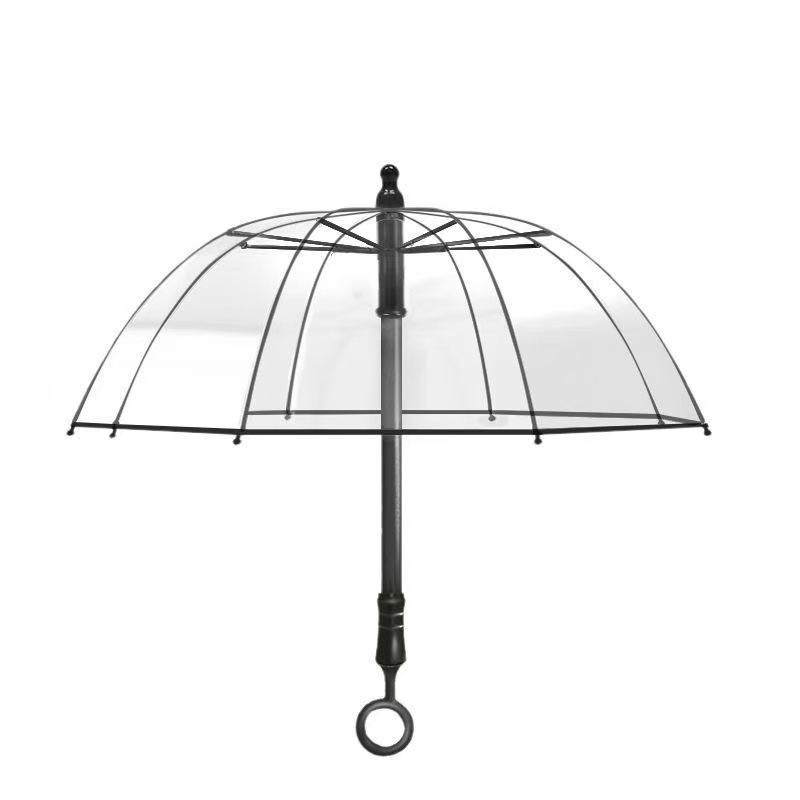
Using an existing frame while customizing the canopy, handle and top fitting is a common approach among customers we work with. It can create a distinctive branded product without the additional investment of developing a completely new frame.
There is already a wide choice of frame styles. However, available frames differ in quality, construction and suitability. Choosing an existing frame does not remove the need for careful selection.
Our recommendations depend on the buyer’s requirements and the experience gained through long-term supplier cooperation and screening. For a product aimed at teenagers, for example, the first step is still to define the intended requirements, then decide which existing parts are suitable and which need separate development.
For a more detailed discussion of prototype and production routes, see custom umbrella handles: from prototypes to small-batch production.
Why Does One Umbrella Project Need Several Specialist Suppliers?
A custom project may involve canopy printing, 3D printing, tooling for zinc-alloy parts or injection-molding tooling. Different specialist suppliers may participate in these stages.
Our role includes coordinating their work and communication. Through sampling, testing and revisions, an individual component must become suitable for assembly into the complete umbrella.
The buyer sees one sample, but getting to that sample may have required several rounds of supplier screening, manufacturing discussions and adjustments.
A development partner adds value by connecting these separate activities and helping turn the buyer’s idea into a workable product. The question is not only whether someone can make a component, but whether the development work can be coordinated across the whole umbrella.
Why Should Design Confidentiality Start Before Tooling?
Before a product reaches the market, its design information may already need to pass through several external development stages. Confidentiality therefore needs attention during development, not only after production starts.
| Development stage | Information or project assets involved | Issue to clarify |
|---|---|---|
| Canopy printing | Original artwork and print files | Whether files may be shared further or used for other products |
| 3D printing | Component shapes and 3D models | How unauthorized copying or circulation of models is addressed |
| Tooling development | Part drawings and molds | How drawing disclosure and unauthorized use of tooling for other orders are addressed |
These are risks to manage, not accusations that every supplier will misuse information.
Some buyers actively request a nondisclosure agreement, or NDA. If a customer has not raised the issue, we also remind them to clarify confidentiality requirements and related development arrangements before work begins.
We respect the work invested in original designs. Protection arrangements should take account of the actual suppliers involved in the development process.
What Practical Work Is Needed Beyond Signing an NDA?
A confidentiality agreement needs to be supported by the way information is handled, suppliers are selected and communication is organized.
For standard products, sending pictures by email or messaging services may be sufficient for some discussions. When a project involves an unpublished customer design, we consider more carefully who receives the information, how the discussion is conducted and whether the specialist supplier is suitable.
In some projects, we have driven approximately 200–300 kilometers to discuss the cooperation details face to face and handle project information carefully. If one supplier is unsuitable, we continue looking for another.
A face-to-face meeting cannot, by itself, guarantee that information will never be disclosed. What it demonstrates in our work is the additional time we are prepared to invest in selecting suppliers and confirming details for a customer’s dedicated development project. That work also adds communication and coordination costs.
Why Does Unauthorized Use of Designs or Molds Matter to the Buyer?
A new product often goes through repeated making, testing, revision and refinement. The customer invests not only development money but also time and the cost of trial and error.
If a design is disclosed before launch, another party may be able to make it first. If completed tooling is used for other orders without authorization, another party may bypass part of the original development investment.
That can undermine the buyer’s opportunity to recover development costs and discourage further investment in original products.
Customer-supplied information and project development results should be used according to the arrangements agreed by the parties. We regard respect for those agreed limits as a basic principle of development cooperation. A completed mold should not be treated as unrestricted permission to use it for other orders.
What Can Custom Umbrella Development Costs Include?
Development costs should reflect the work required for the specific project. Depending on the design and cooperation arrangements, that work may include:
- Component modeling and 3D printing.
- Tooling development suited to the design and material.
- Sample making, testing and revisions.
- Supplier screening and manufacturing-process coordination.
- Additional communication or on-site discussions associated with confidentiality requirements.
Not every project needs every item. Nor does this list mean that each activity will always be charged separately. The quotation and project discussion should make clear what is included and what work is expected.
Our aim is to control unnecessary spending while making sure that the development work genuinely needed to move the project forward is properly accounted for.
Which Five Questions Should Buyers Ask a Development Partner?
- What similar components have you developed? Ask about relevant practical experience with handles, top fittings and the processes your design may require.
- Which parts can use existing solutions, and which need new development? Look for recommendations supported by your requirements, rather than assuming that every part needs new tooling.
- Which stages involve external specialists, and who coordinates them? Clarify how the project will move forward and who is responsible for communication.
- How will confidentiality and the use of design information, tooling and project results be agreed? Understand how the partner will handle the information and assets that matter to your project.
- What does the development fee include, and how will revisions or additional requirements be handled? Establish clear expectations for both the work scope and cost before starting.
In cross-border cooperation, a buyer cannot always observe how files are handled or molds are used. Written agreements matter, and so does whether the development partner respects those arrangements in everyday work.
Frequently Asked Questions
Do I need a new umbrella frame to create a distinctive branded product?
Not necessarily. Using an existing frame with a customized canopy, handle and top fitting is common in projects we encounter. Whether a new frame is needed depends on the structural requirements, budget and sample-validation results. Existing frames still need to be assessed for suitability.
Can a handle go straight into production once its appearance sample is approved?
Appearance alone is not enough. Handle development also involves material selection, tooling and assembly confirmation. Sampling, testing and revisions are needed to establish whether the component is suitable for the complete umbrella.
Can an NDA replace practical confidentiality management?
No. An agreement needs to work alongside careful information handling, supplier selection and communication arrangements, taking account of the specialists involved. Neither a signed agreement nor a face-to-face meeting guarantees that information can never be disclosed.
How should buyers discuss the use of molds for other orders?
Clarify the permitted use of tooling and project results before development starts, then follow the agreed arrangements. Completing a mold does not mean it may be used without restriction for other orders.
Does a development fee cover only the mold?
Not always. The project may also require modeling, 3D printing, sample testing, revisions and supplier coordination. Agree which activities are included in the quotation and which additional requirements could change the cost. Not every activity is necessary or separately charged in every project.
Conclusion: Develop the Product and Respect the Investment Behind It
A reliable custom umbrella development partner needs both the ability to turn a design into a product and the discipline to respect the buyer’s investment in that design.
From our experience at Hand in Hand Umbrella Factory, that means making component and process choices carefully, coordinating the specialists involved, and taking agreed limits on information and tooling use seriously.
To discuss a project, contact our umbrella team to clarify the development scope and confidentiality arrangements before sharing sensitive design information.
Experience Source and Related Reading
This guide is based on Aihua Chen’s practical custom-development experience at Hand in Hand Umbrella Factory. It summarizes cooperation considerations across projects and does not disclose any customer’s confidential design, claim a completed test result or provide a universal development quotation.
Related reading: wooden umbrella handle manufacturing steps and small-batch high-end customization for a German fashion brand.