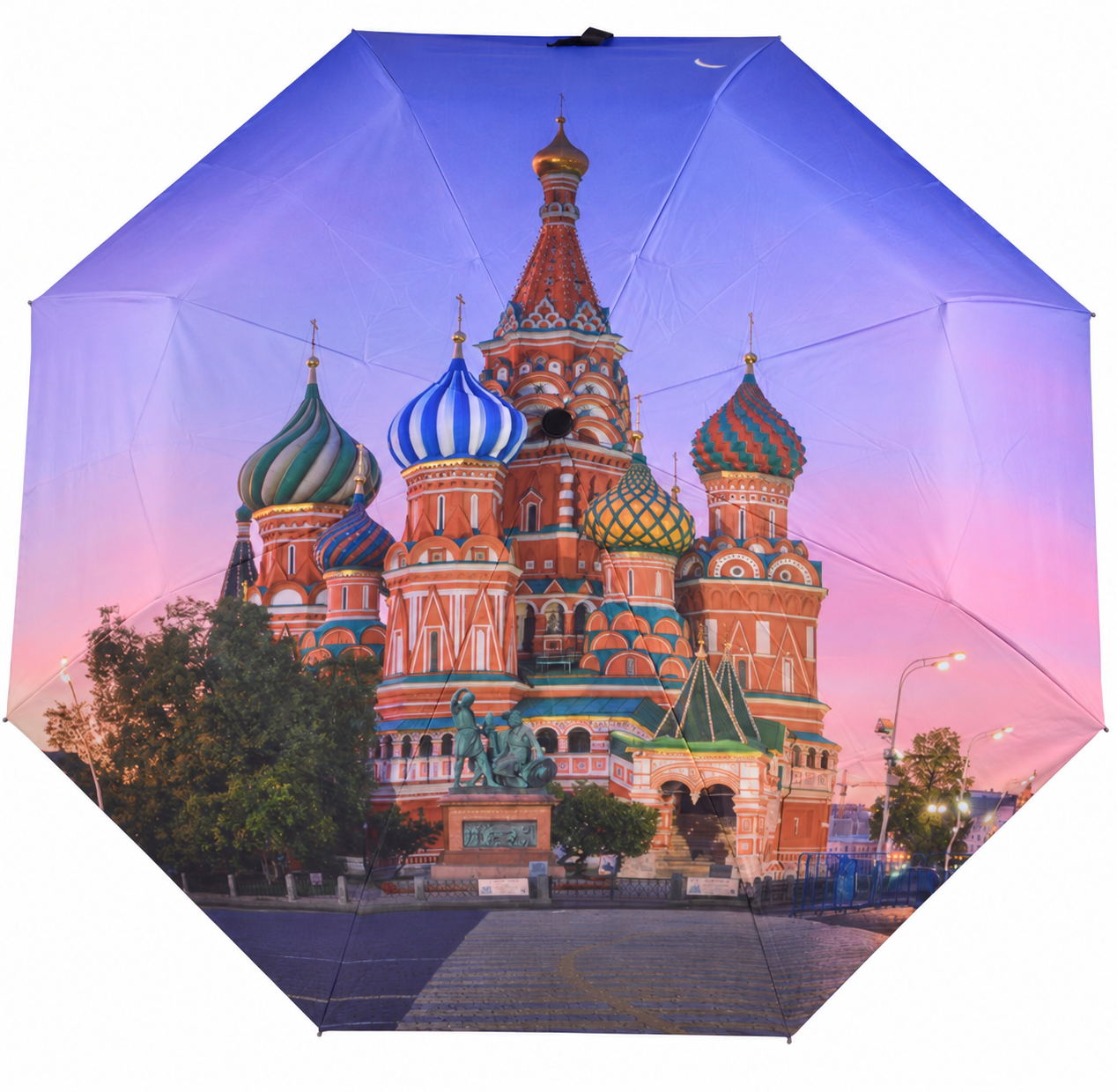
Pattern matching on a digitally printed umbrella depends on more than accurate printing. Panel artwork and seam allowances, print positioning, cutting accuracy, and fabric feeding during sewing all affect how the image joins across seams. Process improvements can reduce misalignment, but achievable results must be confirmed using the actual fabric, panel pattern and finished umbrella sample.
By Chen Aihua | Guangzhou Hand in Hand Umbrella Factory
What does pattern matching mean on an umbrella?
Pattern matching means making the images on adjacent canopy panels join as continuously as possible after sewing. A photograph may look accurately printed on flat fabric but show a small mismatch once the triangular panels are joined into a canopy.
At Guangzhou Hand in Hand Umbrella Factory, we have spent time developing panel layouts and adjusting cutting and sewing methods for full-image umbrellas. The lesson is straightforward: alignment is a whole-process issue, not just a printing issue.
1. Plan the visible image after sewing—not just the cut panel
When dividing an image across canopy panels, the layout must account for the fabric that goes into the seams and the image that remains visible.
The seam allowances on both adjoining panels matter. If only one side is allowed for, or the artwork allowance differs from the actual sewing allowance, part of the picture may disappear into the seam or fail to meet the next panel.
We check the cutting outline, sewing line and finished visible area together. There is no single seam-allowance dimension that fits every umbrella. It must match the actual panel pattern and sewing method.
Where digital printing uses heat transfer, fabric movement through the transfer equipment also needs to remain stable. Movement or variation during transfer can shift the printed image away from its intended position. For related options, see our umbrella printing methods guide.
2. Keep every fabric layer aligned during cutting
After printing, the fabric is cut into panels. Production may involve cutting four or five layers together, or stacks of eight or ten, to improve efficiency. The more layers involved, the more attention is needed to movement between them during spreading and cutting.
Aligning the top layer does not mean every layer underneath is in the same position. Cutting-tool deviation can add further differences. An individual panel may look acceptable until it is placed beside the next panel.
For demanding cross-seam artwork, fewer layers—such as two at a time—or single-layer cutting may make positioning easier to control.
Fewer layers can reduce interlayer movement, but layer count alone does not establish cutting accuracy or guarantee a finished alignment tolerance. Fabric spreading, positioning and cutting technique still matter.
3. Control fabric feeding and tension when sewing the panels
Even accurately cut panels can become misaligned during sewing.
The image may line up at the start of a seam. If the upper and lower fabric layers feed at different rates, however, their positions can gradually drift apart farther along it.
Operator technique also affects the result. Taking slightly more seam allowance in one section and less in another changes how much of the picture remains visible on each side.
Umbrella fabric is flexible, not rigid sheet metal. Pulling it during sewing can change its local position and shape. Consistent seam allowances, balanced feeding and controlled fabric tension are therefore important even when the cut panels look correct.
A practical troubleshooting sequence
| Stage | What to check |
|---|---|
| Panel artwork | Have both seam allowances been included? Will the finished visible images meet? |
| Print positioning | Does the image on the fabric match the planned position? |
| Fabric spreading and cutting | Have layers shifted? Are panel outlines consistent with the printed image? |
| Panel sewing | Are upper and lower feeding, seam allowances and fabric tension consistent? |
| Finished inspection | At the agreed inspection condition, does displacement at priority seams meet the approved requirement? |
Start with these checks rather than assuming every mismatch is caused by the printer.
4. Faces, fine lines and geometric artwork reveal small mismatches
The same displacement can look very different depending on the artwork.
Eyes and mouths, crisp photographic outlines, fine lines and regular geometric shapes are sensitive to discontinuity. A small shift across a seam can be noticeable.
Abstract textures, broad color areas and some loosely painted oil-painting-style images may be more forgiving. However, an oil-painting-style design containing a sharply defined face or outline still needs careful alignment there.
Before sampling, check:
- Whether eyes, mouths or other key parts of a face cross a seam.
- Whether a logo or text is split between panels.
- How many seams a fine line, border or geometric pattern crosses.
Where the composition allows it, place important elements inside the visible area of one panel. Mark unavoidable seam crossings for close inspection during sampling.
Artwork adjustments reduce alignment difficulties at the design stage; they do not replace cutting and sewing control.
5. Can a one-piece canopy reduce pattern-matching problems?
We have also developed a one-piece umbrella design using a single piece of canopy fabric. This avoids the joining seams between separate triangular panels and offers another option for artwork where image continuity is especially important.
Our one-piece design has a particular construction and shape. It is not identical to a conventional multi-panel umbrella, so buyers must also confirm that the umbrella style, shape and intended use are suitable.
A one-piece canopy addresses the joins between panels. It does not eliminate every printing or shaping issue. The printed appearance and the image on the opened umbrella still need finished-sample approval.
6. Agree alignment requirements during sampling
“Please align the pattern” expresses an intention, but it is not a complete production or acceptance requirement.
A clearer approval process has four steps:
- Mark priority positions. Identify the seams, outlines and lines that matter most.
- Agree the inspection condition. Decide whether to inspect a flat canopy or an opened finished umbrella, and use the same condition consistently.
- Keep photographs and measurements. Take close-up photographs of priority areas and record the actual displacement.
- Agree an acceptable range. Use the artwork’s purpose and measured sample results to set the requirements for later production checks.
This lets the buyer and factory discuss the same positions under the same conditions. It also gives process adjustments a clear target.
Can you guarantee alignment within 1 mm?
Not for every custom umbrella. We continue working to reduce mismatches to a few millimeters and, where feasible, aim for less than 1 mm. That is a development objective, not a blanket production guarantee without supporting measurements.
The actual fabric, panel pattern, artwork, inspection points and inspection condition must be identified before agreeing a tolerance. A target should not be presented as a verified result.
See our custom umbrella sampling guide for why development and sample confirmation are separate steps before bulk production.
Frequently asked questions
Why can the finished umbrella image be misaligned when the digital print is accurate?
Printing is only one stage. Seam allowances in the layout, movement between fabric layers during cutting, and unequal feeding or pulling during sewing can all change the image at a seam.
Does single-layer cutting guarantee perfect pattern matching?
No. It removes the issue of movement between stacked layers, but artwork layout, print positioning, cutting technique and sewing still affect the finished canopy.
Which designs need extra attention at the seams?
Faces, text, logos, fine lines and regular geometric patterns. Keep critical elements within one panel where possible, and sample-check those that must cross a seam.
Can every order have a pattern-alignment tolerance below 1 mm?
No. Tolerances need product-specific verification using the agreed material, pattern, inspection points and condition, supported by measurements of the finished sample.
Can a one-piece canopy replace every multi-panel canopy?
No. Our one-piece design has a specific structure and shape. The choice must balance image continuity, umbrella style and practical use.
What should buyers send before developing a full-image umbrella?
Send your artwork, preferred umbrella style and the areas where seam continuity matters most. We can discuss panel layout and sampling, then use the finished sample to confirm an achievable result.
Our focus is on making artwork layout, printing, cutting and sewing work together consistently. A checked finished sample provides a practical basis for production requirements; a promise of perfect alignment without sample evidence does not.
Explore our factory capability and custom umbrella order process for the next steps.