
Lessons from a reported RMB 600 packaging-handling charge
By Aihua Chen | Hand in Hand Umbrella Factory
What should buyers confirm about umbrella export packaging?
Before shipping umbrellas to Germany or another EU market, buyers and suppliers should confirm the outer packaging materials, carton dimensions and quantities, maximum gross weight, carton-joint construction, sealing tape, labels and receiving arrangements. Destination law, buyer purchasing specifications, warehouse intake rules and carrier requirements are different sources of requirements; one party’s approval does not replace the others. Trial-pack the goods, weigh the complete carton and obtain written confirmation of the proposed packaging. Adding a protective layer without checking whether the recipient can accept it can create extra unpacking costs rather than improve the delivery.
Scope and evidence: This guide discusses practical confirmation of outer transport packaging, not every legal obligation associated with packaging placed on the German or EU market. The opening case was reported to me by an industry peer at another umbrella company. It was not an order manufactured or supplied by Hand in Hand Umbrella Factory. The reported charge should not be treated as a customs fine or proof of a regulatory breach. Legal and guideline references below were checked on 21 September 2026.
Why did an umbrella shipment generate an additional RMB 600 handling charge?
An industry peer recently told me that he had transferred approximately RMB 600 to a German buyer to cover additional packaging handling. The shipment consisted of around a dozen cartons, and no quality problem with the umbrellas themselves was reported.
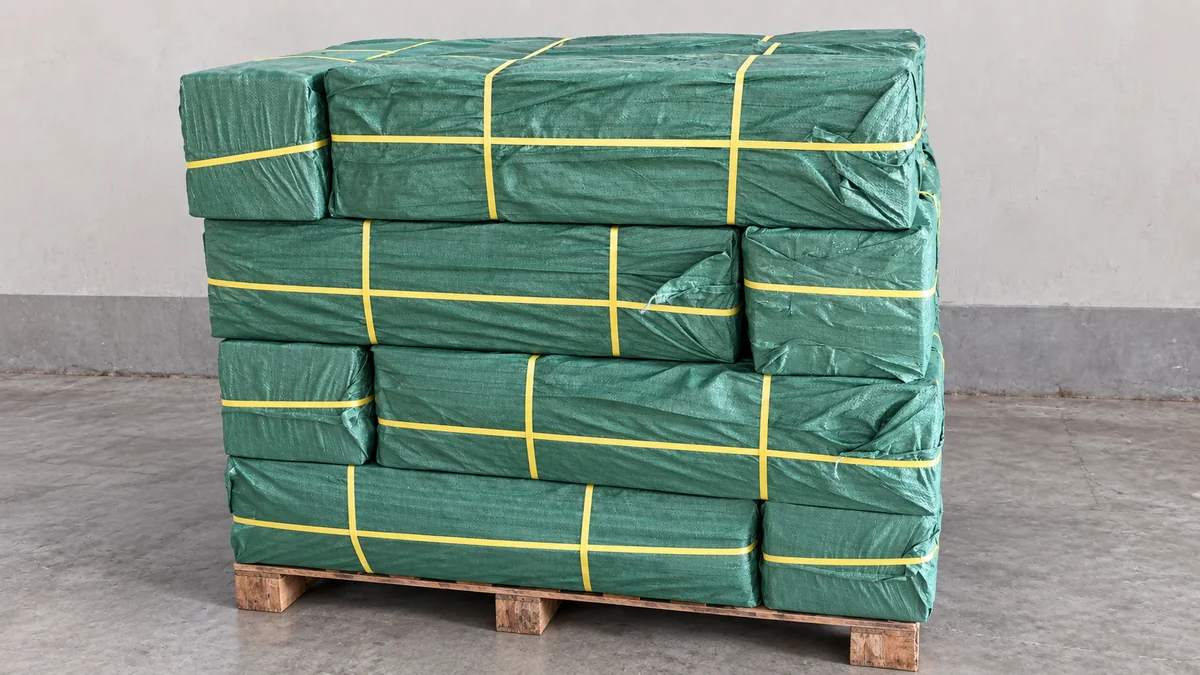
It was the supplier’s first order with that customer. Concerned about abrasion during the long journey, the supplier added a woven outer bag around each carton. From the factory’s perspective, this was an extra measure to protect the goods.
According to the peer’s account, the receiving side required those bags to be removed and the outer packaging cleared before unloading or acceptance could proceed. That created extra handling work and the associated labour charge.
The useful lesson is not that woven bags are prohibited throughout Germany or the EU. It is that an additional packaging material had not been confirmed against the receiving requirements before dispatch.
The RMB 600 figure is a reported handling cost from one shipment, not a standard fee, a verified customs penalty or a forecast of what another shipment will cost. Any dispute about such a charge should be checked against the written receiving rules, the charge breakdown and the actual basis for the work.
Which requirements should buyers separate before approving packaging?
“Packaging requirements for Europe” is too broad to use as a packing instruction. Four different sources may affect the same shipment.
| Requirement source | What it may cover | What to confirm |
|---|---|---|
| Applicable destination law | Packaging materials, environmental obligations and other applicable compliance requirements | Ask the importer or responsible compliance party to identify the relevant provisions and application dates. |
| Buyer purchasing specification | Approved materials, carton specifications, carton joints and labels | Obtain the current written version that applies to the order. |
| Receiving warehouse | Carton weight, pallets, unloading and goods-intake arrangements | Confirm the requirements of the actual delivery location, not just the buyer’s head office. |
| Carrier or transport service | Packaging strength, dimensions, weight and sealing | Check the requirements for the service that will actually carry the shipment. |
Buyer approval does not, by itself, establish legal or transport compliance. Carrier acceptance does not guarantee that the receiving warehouse will accept the same packaging.
If the requirements conflict, resolve the conflict before dispatch. Packing staff should not have to choose between contradictory instructions at the end of production.
Are woven outer bags prohibited for umbrella shipments to the EU?
A receiving restriction on woven bags should not automatically be described as an EU-wide legal ban.
The EU Packaging and Packaging Waste Regulation, Regulation (EU) 2025/40, generally applies from 12 August 2026, but particular obligations have their own application dates and transitional arrangements. Requirements must be assessed against the relevant packaging format, use and provision; the regulation is not a basis for a blanket statement that every woven outer bag on an umbrella shipment is prohibited. Official regulation, including Article 71.
For a specific shipment, ask the buyer, receiving warehouse and carrier whether the proposed outer bag is acceptable. Describe its material and purpose, and provide photographs for review before adding it.
More packaging is not automatically better packaging. The appropriate arrangement must protect the umbrellas and work with the agreed receiving process. A layer that is useful against abrasion may still add unpacking, sorting and disposal work at the destination.
This also means the two packaging examples shown in this guide should not be read as a universal “wrong versus right” comparison.
Must every carton sent to Germany weigh less than 24 kg?
24 kg should not be presented as a universal EU legal limit for umbrella cartons. A buyer, warehouse or carrier may impose a weight limit for a particular operation, but the source and scope of that limit need to be identified.
The EU manual-handling Directive 90/269/EEC considers risks associated with the load, physical effort, working environment and task demands. It does not establish a universal 24 kg maximum for every carton. Weight is only one consideration alongside factors such as size, handling posture and frequency. Official directive and its annexes.
Before packing, ask:
- Who sets the maximum weight for this order?
- Does the limit mean gross weight or net product weight?
- What changes to carton quantity or handling arrangements are required if the trial-packed carton exceeds it?
Carton gross weight includes the umbrellas, carton, inner packaging and other packing materials. It is not just the weight of the umbrellas. Weigh the complete trial-packed carton instead of estimating compliance from the product’s net weight.
Are metal staples banned in all cartons delivered to Germany?
No universal German staple ban should be inferred from a particular retailer’s packaging specification.
For example, REWE Group’s Non-food Packaging Guideline, Version 3.0, section 4.3, requires the manufacturing joint of the transport carton to be glued rather than metal-stapled. Where staples or straps are essential for logistical reasons, it requires prior written approval from the relevant REWE contact. REWE Group supplier guideline.
That is an example of a specific buyer’s supplier requirements, not a general statement of German law. Citing it does not imply that REWE is our customer or that the opening case involved REWE.
If an order requires glued carton joints, communicate that requirement when purchasing the cartons. Check that the selected construction is suitable for the intended load and stacking conditions. Discovering a no-staple requirement only when finished goods are ready to ship can create avoidable repacking work.
Is ordinary clear tape acceptable for export cartons?
“Clear tape” describes appearance, not a complete sealing specification. Buyers should confirm the tape material, width, adhesion and sealing pattern.
For example, DHL Paket’s parcel-packaging guidance allows suitable plastic tape or reinforced paper packaging tape. A customer’s purchasing requirements may differ. DHL Paket packaging guidance.
This parcel guidance should not be treated as the universal rule for sea freight or every other carrier. The actual transport service and the applicable buyer specification must be checked together.
A sealing method used successfully on a previous shipment is not automatically approved for the next buyer, warehouse or transport service.

What seven packaging details should buyers confirm before shipment?
Use the following checklist before carton purchasing and final packing, rather than after the goods have arrived.
| Confirmation item | Questions to resolve before dispatch |
|---|---|
| 1. Outer packaging materials | Are woven outer bags, stretch wrap and straps allowed? Which materials are approved? |
| 2. Carton dimensions and quantity | What are the carton dimensions, units per carton and packing arrangement? |
| 3. Carton weight | What is the maximum gross weight? What is the measured weight of the complete trial-packed carton? |
| 4. Carton-joint construction | Are glued joints required? Are staples prohibited or subject to written approval? |
| 5. Carton sealing | Which tape material and width are required? Where should tape and any reinforcement be applied? |
| 6. Shipping marks and labels | What product details, quantity, carton number and receiving information are required? |
| 7. Receiving and transport arrangements | Which warehouse receives the goods? Are pallets required? What unloading conditions and carrier limits apply? |
Attach trial-packing, weighing and sealing photographs to the confirmation record. The approved specification should reach carton purchasing, the packing team and the final dispatch check.
If a protective material is added or the arrangement changes later, obtain renewed approval and record the change. Approval of an earlier photograph should not be used to justify a materially different final package.
What message can buyers and suppliers use to confirm packaging?
Please confirm carton dimensions, units per carton, maximum gross weight, carton-joint and sealing requirements, and whether woven outer bags or stretch wrap are allowed. Please also provide any receiving-warehouse and carrier requirements. We will trial-pack to the agreed specification and send photographs and actual weight readings for confirmation.
This request is more useful than a general instruction to “pack well.” It turns the discussion into details that purchasing, packing and inspection teams can follow.
How should an umbrella supplier put the agreed requirements into practice?
At Hand in Hand Umbrella Factory, the practical approach described here is to clarify requirements, prepare a trial pack for confirmation and then execute the agreed version.
The supplier should bring together product protection, the buyer’s specification and the actual delivery arrangements. An umbrella can be correctly manufactured yet still create a receiving problem if its packaging has not been agreed.
Packaging confirmation should therefore be part of the order discussion, not an informal last-minute decision by the packing team. It is also separate from checking the quality of the umbrella itself.
For related buyer guidance, read our umbrella quality control guide and the Nigeria order’s China warehouse-handover case. To discuss a new order, send us your umbrella specifications, destination and receiving requirements.
Frequently asked questions
Is adding a woven outer bag always a responsible protective measure?
Not necessarily. A woven outer bag may help protect a carton against abrasion, but it may also create additional unpacking, sorting or disposal work. Confirm whether the receiving warehouse and carrier accept the proposed material before using it.
Can a supplier use its standard packaging if the buyer gives no instructions?
The supplier can propose its standard arrangement, but the buyer’s silence should not be treated as approval. For a first order, explicitly confirm the materials, gross carton weight, sealing and receiving requirements, supported by trial-packing photographs.
Can packaging from an earlier successful German shipment be reused unchanged?
Not automatically. The buyer, delivery warehouse, carrier or specification version may have changed. Check the current order requirements before reusing a previous packing method.
Was the RMB 600 charge in this case a German customs fine?
The industry peer described it as an additional packaging-handling cost paid to the buyer. It has not been established as a customs fine or regulatory penalty. The amount and reason belong to that reported shipment and should not be generalized.
Does EU law require all umbrella cartons to stay below 24 kg?
The EU manual-handling directive does not set a universal 24 kg carton maximum. A specific buyer, warehouse or carrier may set its own operational limit. Confirm the applicable limit in writing and establish whether it is based on gross weight.
Does approval of packing photographs prove complete EU packaging compliance?
No. Photographs help confirm the agreed physical packing arrangement, but they do not establish that every applicable legal obligation has been fulfilled. Applicable law, buyer specifications, receiving rules and carrier conditions must each be checked.
Conclusion: confirm the right packaging, not simply more packaging
The reported RMB 600 handling cost illustrates a practical export lesson: an extra protective layer can become an extra receiving task if it was not agreed in advance.
For umbrella exports to Germany and other EU destinations, separate legal obligations from buyer, warehouse and carrier requirements. Confirm the materials, carton construction, gross weight, sealing and intake arrangements; trial-pack and document the agreed specification before dispatch.
Export service should consider how the goods will be accepted at destination, not only how they leave the factory.
About the author and the evidence
Aihua Chen represents Hand in Hand Umbrella Factory, the factory brand of Hand in Hand Umbrella Factory This guide combines a reported experience shared by an industry peer at another umbrella company with practical export-packaging observations.
The peer’s account is not an independently verified regulatory finding. The official documents linked above provide context within their respective scopes. Laws, buyer guidelines and transport requirements can change; confirm the applicable version and responsibilities with the importer and other relevant parties for each order. All packaging images are illustrative references, not proof of regulatory compliance or records of the reported shipment. For the preceding manufacturing guide, see why umbrella handles come loose.