
PRINTING & SPECIAL-EFFECT INKS
By Aihua Chen | Hand in Hand Umbrella Factory
Quick answer: Choose custom umbrella printing by the artwork, canopy fabric and effect you need. Digital printing is often suitable for photographs and gradients; screen printing is a practical starting point for logos, spot colors and selected special-effect inks. A wet-reveal design needs a compatible hydrochromic ink system, while an afterglow effect needs photoluminescent ink. Approve a sample on the actual production fabric before confirming bulk production.
For overseas buyers, the key distinction is simple: screen printing is an application method; hydrochromic and glow-in-the-dark describe ink effects. They are not three interchangeable printing methods. At Hand in Hand Umbrella Factory, we begin with the design and intended use, then assess the fabric, coating and ink combination.
Which umbrella printing option fits your design?
| Design requirement | Starting point | What to approve on the sample |
|---|---|---|
| Photographs, illustrations or gradients | Compatible digital textile printing | Color, fine detail and fabric compatibility |
| Logos, lettering or spot colors | Screen printing | Color match, clean edges and registration |
| Gold, silver or rose-gold appearance | Suitable metallic-effect ink | Shade, sheen and contrast on the chosen fabric |
| A hidden image revealed by rain | Colored underprint plus a suitable reversible hydrochromic masking layer | Dry coverage, wet reveal and recovery after drying |
| A design that glows after light exposure | Photoluminescent ink | Charging conditions, initial brightness and afterglow decay |
This is a selection guide, not a promise that every ink works on every umbrella. For the broader process comparison, see our guide to four umbrella printing methods.
1. When should you choose screen printing instead of digital printing?
For a clear brand logo or a limited set of solid colors, screen printing is often a useful option. It is not limited to single-color artwork: multiple screens and suitable halftone techniques can produce more complex designs. Registration between colors and the clarity of small text still need sample approval.
Digital printing is often a better starting point for photographic artwork, detailed illustrations and smooth gradients. However, “digital” does not specify one universal process. Ink, fabric and the required preparation or finishing must work together. Epson’s digital textile printing overview explains why the process and material need to be considered together.
A digital image and a screen-printed special effect may be combined where the materials and production sequence are compatible. Ask for a finished fabric sample rather than approving the idea from a computer mock-up alone. Cross-panel artwork also needs attention to seams; our umbrella pattern-matching guide covers this separate issue.
2. Can umbrella logos be printed in metallic colors?
Metallic-effect inks can create gold, silver and related shades, but names such as “rose gold” or “bright silver” are not precise approval standards. Compare the physical print with your reference under agreed lighting, on the actual canopy color.
Check the sheen, contrast, coverage of fine lettering and consistency at the edges. A metallic effect that looks strong on dark cloth may look different on a pale canopy. Matsui’s special-effects ink range includes gold and silver shimmer bases; this illustrates available ink technologies, not certification of a finished umbrella.
3. How does a rain-activated, color-reveal umbrella work?
One reversible hydrochromic approach uses a colored design underneath a white masking print. When dry, the white layer hides the color. When wet, it becomes less opaque and reveals the design beneath. After drying, the white coverage returns. Matsui describes this wet-reveal behavior for its Hydrochromic White ink in the manufacturer’s product information.
This describes one ink system, not every product marketed as “color-changing.” Ask the supplier whether your chosen formulation is reversible and whether it has been tested on your fabric and coating.
- Dry: Does the masking layer cover the design evenly?
- Wet: Is the revealed pattern clear under the agreed wetting conditions?
- Dry again: Does the original appearance return, and how long does it take under the recorded conditions?
- Repeat: Is the effect consistent after repeated wetting, drying and folding?
4. How does glow-in-the-dark umbrella ink work?
Photoluminescent, or glow-in-the-dark, ink absorbs light and releases an afterglow when the light source is removed. Fluorescent ink is different: its fluorescent effect requires ongoing illumination. DayGlo explains the distinction between fluorescence and phosphorescence.
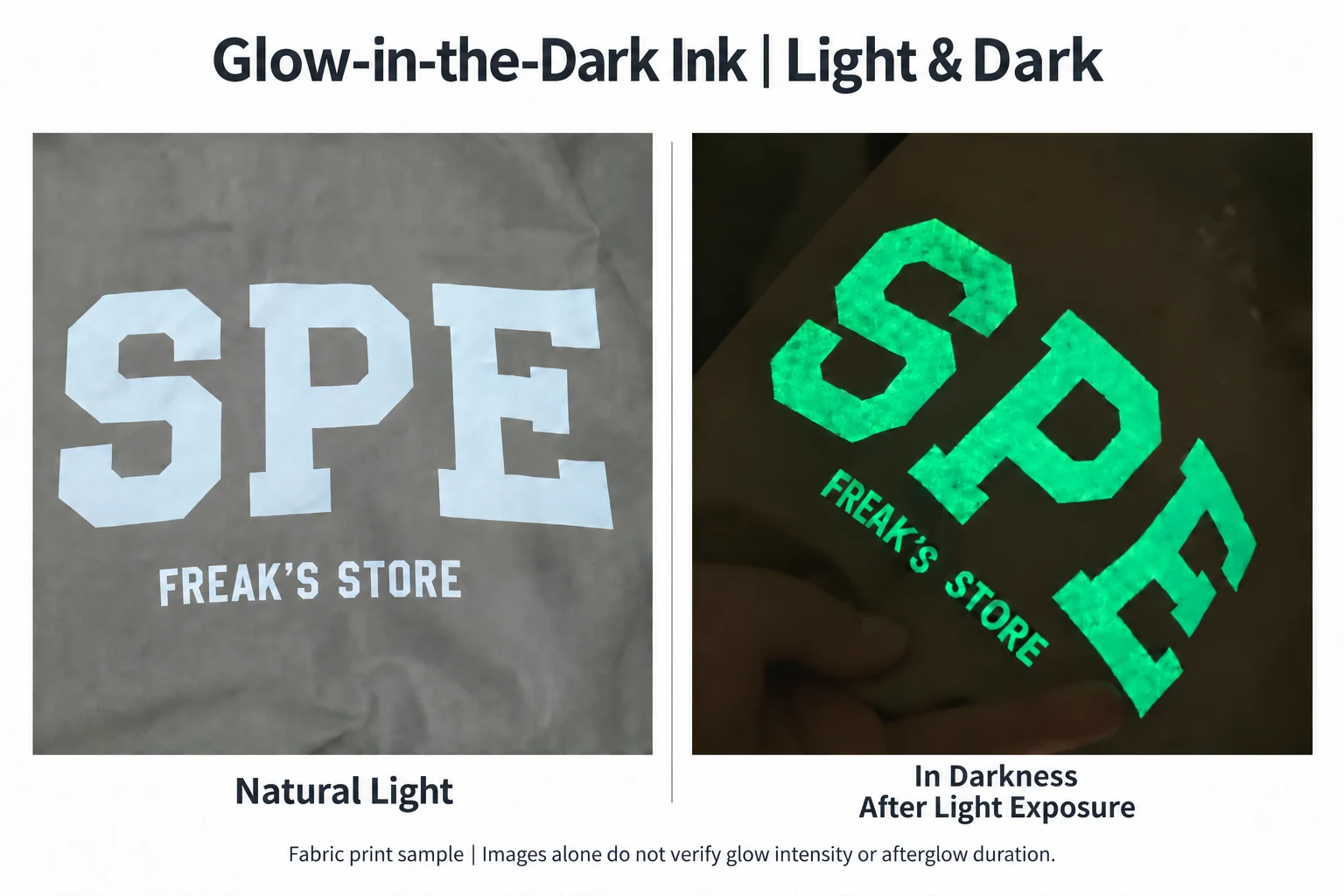
In the factory sample discussed here, the print looked grayish under stronger daytime light and showed a faint glow in darkness after light exposure. That daytime appearance is specific to this sample, not a universal characteristic of glow inks. The displayed comparison illustrates the two viewing conditions, not a measured performance result or a claim of a commercial relationship with the brand shown.
There is no single afterglow duration that can be promised for all printed umbrellas. Ink formulation, deposited layer, fabric, charging light and observation conditions affect the result; brightness also fades over time. A camera’s exposure can make a faint glow appear stronger than it looks to the eye.
Record the light source, exposure duration and elapsed time before each observation. If brightness or duration is an order requirement, agree a measurement method and acceptance level before sampling. Decorative glow is not proof of retroreflective performance or protective-equipment compliance.
5. What should buyers test before a bulk order?
The same artwork may behave differently on nylon, polyester or a water-repellent finish. Ink selection and curing conditions must suit the actual substrate. Matsui’s water-resistant fabric ink guidance identifies dedicated systems for treated fabrics, reinforcing the need to check compatibility rather than assume a general textile ink will work.
- Artwork: Confirm print size, placement, colors, small text and registration.
- Material system: Confirm fabric, coating, ink and the supplier’s specified curing process.
- Durability: Agree adhesion, rubbing, water exposure and repeated-folding checks relevant to the order.
- Effect: Evaluate wet/dry recovery or afterglow under documented conditions.
Keep the approved sample and written acceptance criteria for production comparison. An ink supplier’s technical documents help select materials, but do not replace checks on the printed fabric or finished umbrella.
6. What information is needed for a printing quotation?
Send the artwork file, print dimensions and position, canopy fabric and coating if known, required effect, order quantity and color references. For a wet-reveal design, show both the dry and wet appearance. For glow printing, explain how the umbrella will receive light and what result you expect afterward.
We can then discuss feasibility and sampling before confirming a production quotation. For a more complete enquiry, use the custom umbrella quotation checklist.
Frequently asked questions
Is screen printing only suitable for one-color umbrella logos?
No. Screen printing can use multiple colors and suitable halftone techniques. The number of screens, registration and artwork detail should be assessed before sampling.
Will a rain-reveal umbrella return to its original color when dry?
A suitable reversible hydrochromic masking system is designed to recover after drying. Confirm the selected formulation, drying conditions and repeated-cycle performance on the actual canopy fabric.
Is fluorescent ink the same as glow-in-the-dark ink?
No. Fluorescent effects need ongoing illumination; phosphorescent glow-in-the-dark materials can produce an afterglow after light exposure.
How long will a glow-in-the-dark umbrella print glow?
There is no universal duration. Confirm the ink system and test the actual print under agreed charging and measurement conditions; a photograph cannot establish brightness or afterglow duration.
Can digital printing and screen printing be used together?
They may be combined when the fabric, coating, inks and processing sequence are compatible. Approve the combined result on a physical sample before bulk production.
Discuss your umbrella artwork and print effect
Send your design and intended use to Hand in Hand Umbrella Factory. We will review the proposed process, discuss a suitable sample and clarify what needs approval before production.