
Direct answer: how do you turn an umbrella concept into a working prototype?
Start by checking whether the proposed handle, top finial and other custom parts can fit an actual umbrella without obstructing opening or closing. Translate the approved concept into a dimensioned 3D CAD model, review it with the buyer, and make physical prototypes to check size, feel and assembly. Fit those parts to a complete umbrella before committing to production tooling. If dedicated molds are required, tooling, mold trials and approval of samples made with the intended production process must follow. CAD modeling, prototype production and tooling are separate development stages; their costs and deliverables should be defined separately.
Case scope: an ongoing development project, not a completed product
This guide records the first stage of a real overseas custom umbrella development project at Hand in Hand Umbrella / Guangzhou Hand in Hand Umbrella Factory. The buyer supplied concept artwork for a custom handle, top finial and related components, but did not have production-ready 3D CAD files.
During our preliminary structural review, we identified a possible interference problem that could prevent normal umbrella closing. We discussed it with the buyer, who accepted the initial direction for improvement.
As recorded in the source account dated September 17, 2026, the preliminary development arrangements had been agreed and the relevant documents signed. We were awaiting the agreed payment to start development. 3D modeling had not formally started, and no physical prototype had been made. The later stages described below are the intended development route, not completed production or test results.
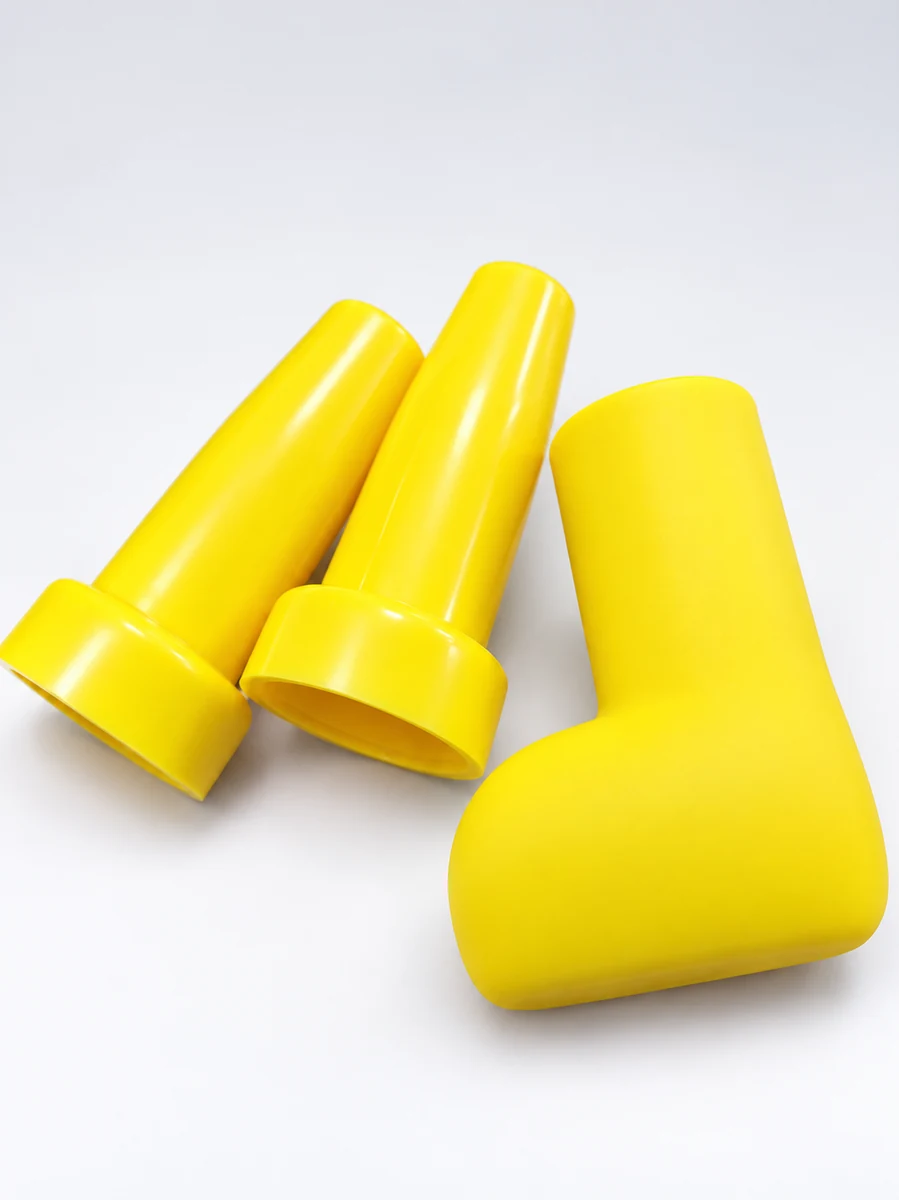
The buyer’s identity, unpublished artwork and specific design are not disclosed. The component illustration supplied for this guide is a general reference, not a disclosure of the confidential design or evidence that its metal prototypes have been completed.
Project overview
| Item | Position in this project |
|---|---|
| Starting material | Two-dimensional concept artwork; no production-ready CAD model |
| Components under discussion | Custom umbrella handle, top finial and related parts |
| Issue identified before modeling | Potential interference with the umbrella in its closed position |
| Initial response | Explain the conflict and agree an initial design-adjustment direction |
| Proposed prototype route | Aluminum-alloy powder 3D printing, followed by suitable surface finishing |
| Intended production direction | Zinc-alloy components, subject to further development and sample approval |
| Current stage in the source account | Arrangements and documents agreed; awaiting payment to begin |
| Not yet completed | CAD modeling, physical prototypes, complete-umbrella validation, tooling and production |
Why is a concept drawing not enough to start manufacturing?
A concept drawing answers “What should the product look like?” Manufacturing also has to answer “Will this design work when it is attached to an umbrella?” These are different questions.
A clear front-view illustration may still leave the following undefined:
- The thickness of the shape and the structure on its reverse side.
- Actual dimensions rather than apparent proportions.
- How the component connects to the umbrella shaft.
- Clearance around the opening and closing mechanism.
- Space for ribs and rib tips to move.
- The relative positions of all parts when the umbrella is closed.
- The weight and feel of the handle during use.
Our first question is therefore not simply whether we can reproduce the appearance. It is whether the umbrella will still open, close and function normally after the new parts are fitted.
Why did this design need adjustment before CAD modeling?
In the preliminary review, we found that the original shape could occupy space needed by part of the closed umbrella. It could look convincing in the drawing yet interfere with closing when installed on the real product.
We explained the issue before arranging fabrication, rather than proceeding from appearance alone. The buyer understood the concern and accepted an initial optimization direction. This does not mean the revised design has already passed physical validation; that remains work for the following stages.
Finding the conflict early matters. If it is discovered after CAD modeling, the model needs revision. If a prototype already exists, the part may need to be remade. If tooling has already been produced, the correction can become more costly.
The first step in a complex custom umbrella project is to establish whether the design fits the umbrella’s working structure—not simply to make a sample that resembles the drawing.
What does 3D modeling need to define?
Once the basic structural direction is agreed, the two-dimensional idea must be developed into a three-dimensional design suitable for review and fabrication. For a custom handle, finial or other special part, three groups of information need to come together.
1. Appearance and shape
The model must define overall proportions, front details, side profile, reverse-side structure, thickness, curved surfaces and edge treatment. Details that are absent from the concept artwork need to be resolved during modeling rather than guessed during production.
2. Dimensions and clearances
Confirm the overall length, width and thickness; mounting position; dimensions at the shaft connection; and the space that must remain between the custom part and neighboring components.
3. Assembly and operation
Define how the handle connects to the shaft and how the top finial mounts. Check access to the operating mechanism, rib movement and potential collisions when closing. Consider whether the connection could loosen and whether the intended assembly method will be practical in production.
Product CAD modeling is not merely converting a picture into a STEP file. It combines appearance, dimensions, assembly relationships and functional requirements in one three-dimensional design.
Does the buyer have to provide STEP or STP files?
No. The next step depends on what the buyer already has.
| Files available | Appropriate next step |
|---|---|
| A suitable 3D CAD model | Review dimensions, structure and manufacturing suitability, then confirm the sampling route |
| A 3D model that needs changes | Agree the modification scope and update the model |
| Only two-dimensional concept artwork | Build a 3D model around the concept and the actual umbrella requirements |
STEP/STP is a useful exchange format when the buyer has an existing CAD model. However, being able to open a file does not establish that its geometry is suitable for an umbrella component. Connections, movement clearances, dimensions and the intended manufacturing process still need review.
In this project, the buyer did not have production-ready 3D files, so professional modeling assistance needed to be arranged.
Why is CAD development charged separately?
Modeling is development work, not just tracing. The designer must connect the concept to dimensions, three-dimensional geometry, assembly relationships and a manufacturable structure. The process can involve an initial model, joint review, requested revisions, adjustments and further approval.
Before starting, define:
- The components to be developed.
- The work included in the modeling scope.
- The files to be delivered, including whether STEP/STP exchange files and native editable CAD files are included.
- The scope of included revisions.
- The development fee and payment terms.
- The expected completion schedule.
A suitable model supplied by the buyer should not need to be rebuilt unnecessarily. If it requires structural changes, the additional work should be identified and priced according to its actual scope.
Agreeing these points upfront is more useful than debating later whether a particular revision was included in the original modeling fee.
Why is a physical prototype still needed after CAD approval?
A CAD model checks the digital design; a physical prototype allows the actual component to be evaluated. Approving one is not the same as approving the other.
A physical sample helps answer questions that are difficult to settle fully on a screen: Does the size look balanced? Is it comfortable to hold? Is the weight appropriate? Do the proportions need adjustment? Does the connection to the shaft look and feel right? Does the installed component obstruct anything? Is the proposed surface finish consistent with the design intent?
For a complex custom component, we therefore do not treat model approval as final product approval.
Why consider an aluminum-alloy 3D-printed prototype for this project?
The buyer wants a metallic character in the finished product, and zinc-alloy production components are being considered. To obtain a physical metal reference before investing in production molds, the route currently under discussion is aluminum-alloy powder 3D printing followed by appropriate surface finishing.
This can help assess shape, dimensions, assembly, overall proportions and the effect of installing a metal component on the umbrella.
An aluminum-alloy 3D-printed prototype cannot fully represent the final zinc-alloy production part. Different materials and manufacturing methods can produce differences in weight, handling feel, surface texture, formed details and finishing results.
The purpose of this prototype is to identify design and assembly problems before committing to tooling. The final zinc-alloy result must still be checked using samples made through the intended production process. No metal prototype has yet been completed in the project described here.
How do modeling fees, prototype fees and tooling fees differ?
| Cost category | Main deliverable | What the quotation should specify |
|---|---|---|
| 3D CAD modeling | A three-dimensional model for review and approval | Development scope, file delivery and revision arrangements |
| Physical prototyping | Sample components for physical evaluation | Material, quantity, surface finish and whether assembly is included |
| Tooling development | Molds for subsequent production | Tooling scope, mold trials, adjustments and sample approval |
Other charges may include a complete umbrella sample, component assembly, surface treatment, sample shipping, replacement prototypes following revisions, or special tests.
These items should be separated clearly enough that the buyer understands what each payment covers. A modeling quotation should not be assumed to include a metal prototype, and a prototype quotation should not be assumed to include production molds. This account does not establish a fixed development price or a standard completion time for other projects.
For a related example of the work behind a sample, read our square umbrella sampling-fee case.
Why must the parts be checked on a complete umbrella?
The buyer ultimately needs a functioning umbrella, not two attractive metal components. Once the individual prototypes are reviewed, they must be fitted to an actual umbrella for a complete-product assessment.
The checks should include:
- Overall appearance and proportions.
- Smooth opening.
- Normal closing.
- Clearance for the movement of other components.
- Reliability of the connections.
- Comfort when holding the umbrella.
- Weight distribution.
- Whether the assembled appearance matches the agreed design intent.
A component prototype checks the part; a complete umbrella sample checks how the parts work together. A handle that appears satisfactory on its own can still create a problem after installation.
These are checks to be carried out during development, not a claim that this project has already passed them.
Can mass production begin immediately after prototype approval?
Not normally when dedicated production molds are required. For the proposed zinc-alloy parts in this project, the next stages would be tooling development, mold trials, inspection of molded samples, any necessary adjustments, and final sample approval.
The overall route is:
- Discuss the concept and intended use.
- Review structural feasibility.
- Develop the 3D CAD model.
- Obtain model approval.
- Make physical prototypes.
- Validate the assembly on a complete umbrella.
- Develop production tooling where required.
- Run mold trials.
- Approve samples made using the intended production materials and process.
- Begin bulk production after the required approvals.
Each stage addresses a different uncertainty. Appearance approval alone is not a reason to skip assembly checks or production-process validation.
When should confidentiality arrangements be discussed?
For an unpublished original design, we recommend discussing confidentiality before detailed development files are shared and before the project formally starts.
In this case, we proposed a confidentiality agreement. The buyer agreed with the approach, and the parties clarified matters relating to the original design and development information. The source account records that the relevant documents have been signed.
Confidentiality also needs practical controls when external CAD specialists, 3D-printing providers or other suppliers participate. Decide who can access the files, which information they need, the permitted purpose, whether anything may be displayed without authorization, and how files and samples will be handled.
We do not disclose a buyer’s unpublished design merely to demonstrate factory capability. That is why this guide discusses the development decisions without showing the client’s identity, drawings or specific design.
For broader supplier-selection questions, see choosing a custom umbrella development partner and protecting design confidentiality.
What should buyers prepare before requesting a prototype quotation?
Prepare as much of the following as possible:
- Concept artwork or reference images.
- A list of the parts to be customized.
- Expected order quantity.
- Approximate dimensional requirements.
- Preferred materials.
- Color and surface-finish requirements.
- Existing CAD or STEP/STP files, if available.
- The intended use of the umbrella.
- Target timing for both samples and production.
Complete information helps the supplier distinguish between what can be made directly, what requires modeling, what needs a prototype and what will require tooling. The development scope should be confirmed before assuming that a visual concept is ready for production.
What has actually been completed so far?
The buyer has supplied the concept. We have carried out an initial structural review, identified and discussed the possible closing interference, and agreed an initial adjustment direction. Preliminary development arrangements have been confirmed and relevant documents signed.
At the stage recorded in the source account, we are awaiting the agreed payment. CAD modeling has not formally started and no physical prototype has been made. This is an ongoing development record, not a completed success story.
We intend to record further practical findings as the project moves into modeling, metal prototyping, full-umbrella assembly and, if it proceeds, tooling and production. Those later outcomes are not presented as facts in this first-stage account.
Frequently asked questions
Can I develop a custom umbrella from just a concept drawing?
Yes. A concept drawing can be the starting point, but dimensions, three-dimensional details, mounting connections and functional requirements usually need to be defined before CAD modeling and physical validation.
Do you need to rebuild my model if I already have a STEP file?
Not necessarily. The existing model should first be checked for dimensional, structural, assembly and manufacturing suitability. A usable model need not be rebuilt; any required changes should be agreed as a defined scope of work.
Does a CAD modeling fee include the physical prototype?
Do not assume that it does. CAD development and physical prototyping are separate stages. The quotation should specify the deliverables, materials, quantities and any assembly or finishing included.
Can an aluminum-alloy 3D-printed prototype exactly represent a zinc-alloy production part?
No. It can help assess shape, size and assembly, but material, weight, handling feel, surface appearance and manufacturing method differ. Samples made using the intended production process are still needed to confirm the final result.
Why are tooling and mold trials needed after prototype approval?
A prototype mainly supports design validation, while production tooling is used to reproduce the part through the intended manufacturing process. Parts made with the production material and process still need inspection and approval before bulk manufacture.
Can a buyer ask the factory to keep an original umbrella design confidential?
Yes. Discuss an NDA and the relevant design and intellectual-property arrangements before sharing detailed unpublished development information. Also clarify how access is controlled when outside modeling specialists, prototyping providers or other suppliers participate.
Conclusion: develop a working umbrella, not just a convincing shape
The hardest part of complex customization is not always reproducing an attractive shape. It is making that shape part of an umbrella that functions properly and can be manufactured consistently.
Structural review, CAD modeling, physical prototypes, assembly checks, tooling and production samples each provide a different layer of confirmation. Keeping those stages and their costs distinct helps buyers make informed decisions before moving to the next commitment.
This is the first-stage account of our ongoing project. It records the issue we identified, why we raised it and the development route being prepared—not an uncompleted prototype or production outcome presented as a success.
Contact our umbrella team to discuss your concept, existing files, component requirements and target quantities.
Experience source: Hand in Hand Umbrella / Guangzhou Hand in Hand Umbrella Factory, established in 2000, focusing on custom umbrellas and OEM/ODM projects.