
Direct answer: A parasol is a broad term for sun-shading umbrellas and may describe either a handheld sun umbrella or a large freestanding outdoor umbrella. A promotional parasol is primarily selected for brand display as well as shade; a beach umbrella prioritizes portability, corrosion considerations and secure fixing on sand or beside a pool; and a patio umbrella is generally chosen for longer-term use at hotels, cafés, restaurants, villas and gardens. Buyers should compare actual opened size, structure, pole and rib materials, canopy performance, branding, base and installation—not the product name alone.
Information boundary and scope: Product names vary among suppliers, regions and online platforms. The sizes, structures and materials below are common sourcing references, not universal industry standards. Wind safety cannot be determined from the name “patio umbrella” or “beach umbrella” alone; it depends on the complete structure, base weight, anchoring, site exposure, maintenance and operating conditions. Final specifications and acceptance criteria should follow the approved sample, technical sheet, installation plan and written order requirements.
Quick Comparison: Four Common Outdoor Umbrella Names
| Term | What it usually means | Typical use | What buyers should confirm first |
|---|---|---|---|
| Parasol | A broad sun-shading category; it can be handheld or a large freestanding outdoor model. | Personal sun protection, outdoor activities, shops, resorts and patios. | Whether the request is for a handheld umbrella or a large outdoor unit, plus the actual opened size. |
| Promotional parasol | A large outdoor parasol carrying a logo, brand name or campaign graphics. | Retail promotions, kiosks, food and beverage outlets, events and market stalls. | Branding area, print colours, campaign duration, budget, base and installation. |
| Beach umbrella | Usually a centre-pole outdoor umbrella designed for beaches, resorts or pool areas. | Beach rental, resort, poolside and portable outdoor shade. | Corrosion exposure, total weight, portability, opened dimensions and fixing method. |
| Patio umbrella | An outdoor umbrella selected as part of a hospitality, residential or commercial space. | Hotels, cafés, restaurants, villas, gardens and poolside dining. | Structure, fabric, base, long-term outdoor exposure, operation and visual coordination. |
The most reliable comparison is specification against specification—not name against name.
What Does “Parasol” Mean?
“Parasol” describes an umbrella mainly intended to provide shade from the sun. The term is not limited to one size. In consumer use, it may mean a compact handheld sun umbrella. In commercial sourcing, it often refers to a freestanding outdoor umbrella with an opened diameter of about 2 metres, 2.4 metres or more.
This difference matters when requesting a quotation. A message asking only for “a parasol” does not tell a manufacturer whether the buyer needs a handheld item, a centre-pole beach umbrella or a large commercial installation. Buyers should state the application, opened diameter or side length, pole position, base requirement, quantity and printing needs at the beginning of the inquiry.
What Is a Promotional Parasol?
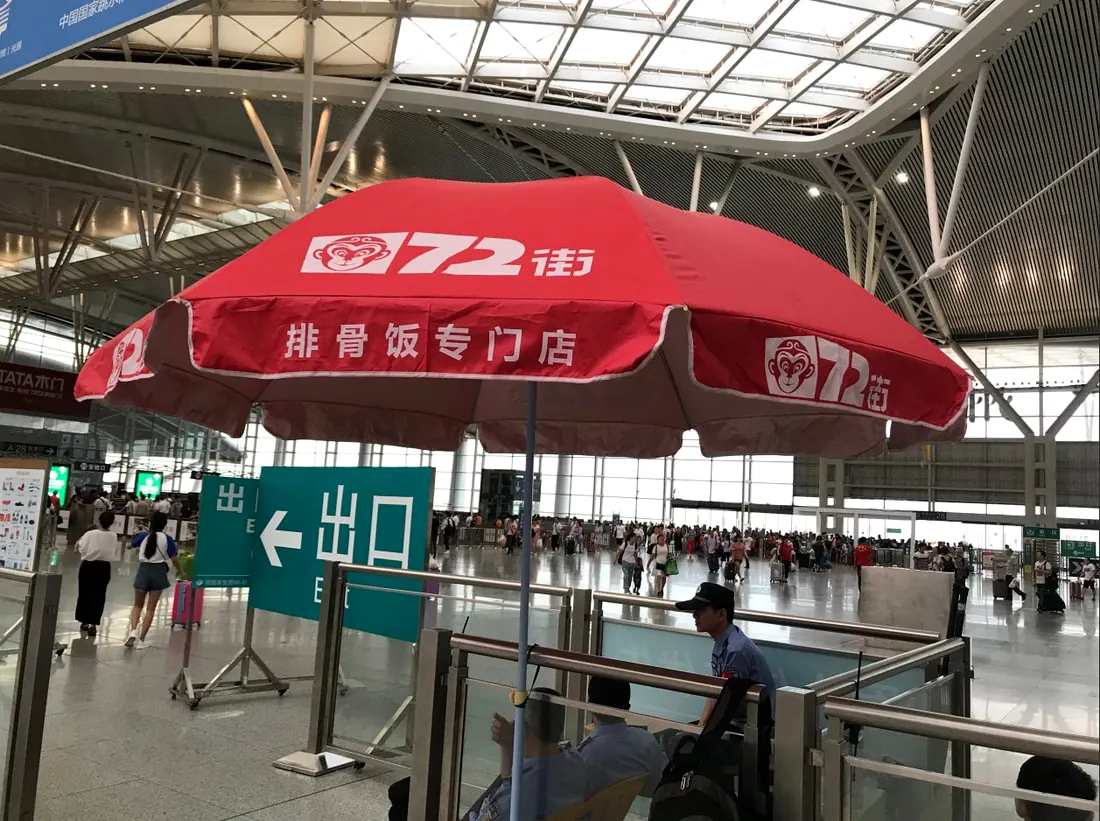
A promotional parasol—also called an advertising umbrella by some buyers and suppliers—is a large outdoor umbrella that combines shade with brand visibility. Logos, product names or campaign graphics may be printed on the canopy and, where the design allows, on the valance.
Traditional promotional parasols often used a round canopy with eight ribs. Square models with four heavier ribs are also common because the panel layout can suit some logos and retail spaces. Historically these umbrellas were widely used by kiosks, roadside stalls, snack shops, beverage brands and fast-moving consumer-goods campaigns. Their use has changed in some large cities, but they still serve practical roles in towns, resorts, outdoor dining, product promotions and temporary events. See an outdoor event promotional umbrella product reference.
What should be specified for a custom printed parasol?
- The finished opened diameter or side length and the agreed measurement method.
- Round or square canopy, centre pole or side-post structure, and the required opening system.
- Logo size, print position, number of colours and whether the valance is printed.
- Expected campaign duration and whether the umbrella will be moved frequently.
- Base type, ground fixing, installation responsibility and the site’s exposure to wind.
What Is a Beach Umbrella?
A beach umbrella is usually a centre-pole model intended for shade on beaches, around pools or in resort areas. Common supplier labels include 48-inch × 8K, 52-inch × 8K, 48-inch × 10K and 52-inch × 10K. “K” indicates the number of ribs. However, the inch label may refer to rib length or a nominal specification rather than the finished open diameter, so it should never replace an agreed dimensional drawing or physical measurement.

Steel or aluminium pole?
A traditional cost-controlled beach umbrella may use a steel pole and steel ribs with a baked or powder-coated surface. Steel can be practical for price-sensitive projects, but weight and corrosion protection require attention. An aluminium pole is lighter and can be preferable where the umbrella is moved frequently or appearance is important. It is not automatically the best choice for every structure: wall thickness, connector design, base, dimensions, environment and budget still matter.
Are fiberglass ribs always better than steel ribs?
No. Fiberglass ribs can provide useful flexibility, while steel ribs may suit other cost and structural requirements. Overall performance depends on rib dimensions, joint design, assembly quality, canopy tension, the complete frame and the fixing system. A single material name is not enough to predict the finished umbrella’s suitability.
For a practical beach-umbrella sourcing checklist, see our guide to choosing a beach umbrella.
What Is a Patio Umbrella?
A patio umbrella is normally selected for hotels, cafés, restaurants, villas, gardens, terraces and poolside dining areas. Available configurations include round or square canopies, centre-pole designs and cantilever or side-post structures. Compared with a short promotional campaign, patio projects often place more emphasis on appearance, operation, maintainability, fabric colour, weather exposure and coordination with surrounding furniture or architecture. Buyers can compare available outdoor options in the sun umbrella product category.
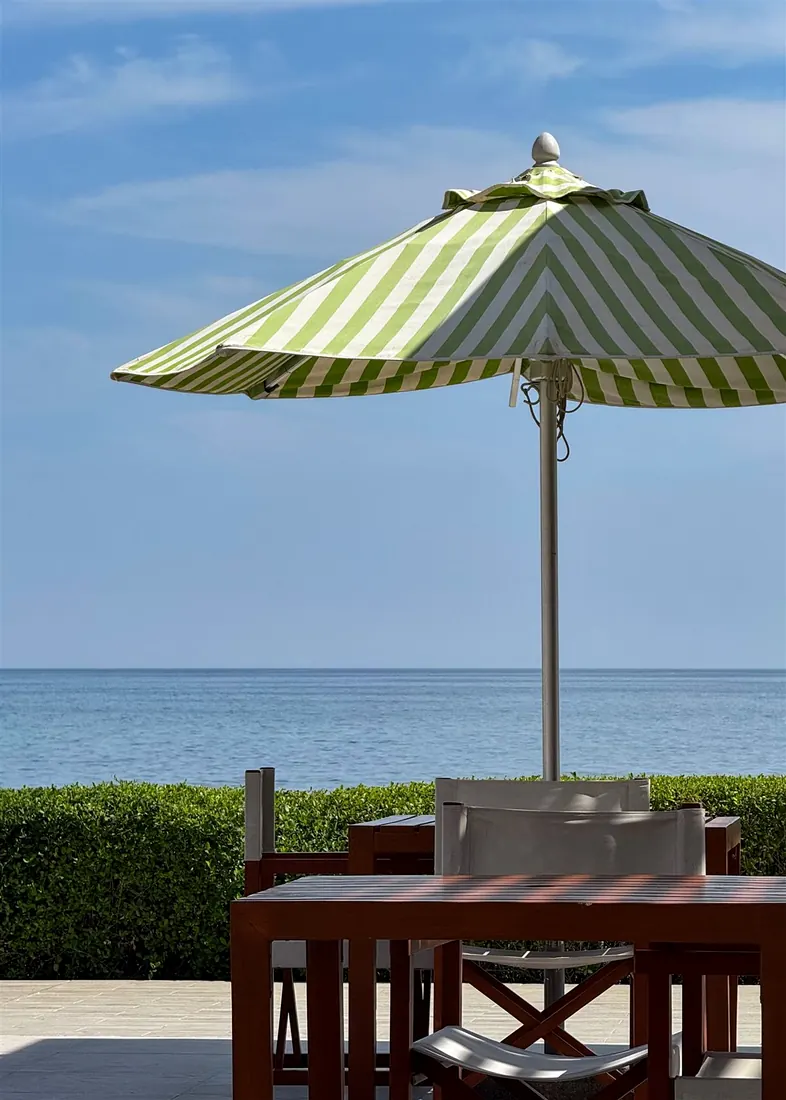
The name “patio umbrella” is not a wind rating. A visually heavy frame may still be unsafe if the base is undersized or the site is exposed. Likewise, a suitable base does not mean the umbrella should remain open in strong winds, severe weather or when unattended. The operating instructions and site-specific installation plan must be followed.
Detailed Specification Comparison
| Comparison point | Promotional parasol | Beach umbrella | Patio umbrella |
|---|---|---|---|
| Primary buying goal | Brand exposure plus practical shade. | Portable shade for beach, pool or resort use. | Comfort, appearance and repeated outdoor operation. |
| Typical scene | Retail outlet, event, kiosk, stall, food or beverage promotion. | Beach, resort, poolside or temporary leisure area. | Hotel, café, restaurant, villa, garden or terrace. |
| Common structure | Round eight-rib or square four-rib, usually centre pole. | Portable centre-pole structure. | Centre pole, cantilever or side-post structure. |
| Material tendency | Selected around budget, print area and campaign duration. | Steel/steel for cost control; aluminium/fiberglass are possible upgrades. | Greater attention to frame strength, operation, finish, fabric and maintainability. |
| Branding | Usually central to the project. | Optional; often secondary to portability and environment. | Optional; appearance may be more important than a large logo. |
| Fixing | Base or site-specific anchoring must be confirmed. | Sand or portable base requirements vary by location. | Weighted base or engineered ground fixing may be required. |
Maldives Customer Case: What the Application Tells Buyers
Hand in Hand Umbrella produced a batch of large outdoor parasols for a customer in the Maldives. The disclosed information is useful because it shows the type of application: large shade coverage, some rain shelter, brand presentation and integration with a resort or island environment.
However, the source case does not disclose the order quantity, exact dimensions, confirmed materials, wind test results or installation data. Those details should not be guessed. For an island or coastal project, a buyer and supplier should specifically discuss corrosion exposure, the base and anchoring plan, transport volume, on-site installation, maintenance and the actual wind conditions before finalizing a specification.
Case lesson: A photograph or destination can explain the intended scene, but it cannot replace a technical specification, site assessment or approved sample.
11 Details to Confirm Before Requesting a Quotation
- Opened size: State the finished diameter or side length and how it will be measured.
- Shape and pole position: Confirm round or square, centre pole or cantilever/side-post.
- Rib system: Specify rib quantity, material, dimensions and key joint construction.
- Pole: Compare steel and aluminium options using wall thickness, finish and complete structure—not material name alone.
- Canopy: Confirm fabric type, weight or density where relevant, colour, UV expectations, water resistance and weathering requirements.
- Branding: Provide logo files, colours, printed area, location and the required visual result. Review our custom umbrella printing methods before approving the process.
- Environment: Explain whether the site is coastal, humid, windy, dusty or exposed for long periods.
- Base and anchoring: Define the base, required weight, ground condition and installation responsibility.
- Operating pattern: State whether the umbrella is temporary, moved daily or left outdoors for longer periods.
- Delivery and service: Confirm packing size, shipping method, installation needs, spare parts and after-sales arrangements.
- Approval and acceptance: Agree on the sample, technical sheet, tests required for the specific project and the inspection method before production.
Buyers can review the factory’s available categories on the custom umbrella products page, then send the intended scene, dimensions, quantity, logo and installation details through the contact page.
How Hand in Hand Umbrella Develops an Outdoor Umbrella Proposal
Guangzhou Hand in Hand Umbrella Factory has manufactured umbrellas since 2000 and has experience discussing promotional parasols, beach umbrellas, aluminium-pole and fiberglass-rib options, square patio umbrellas, and outdoor solutions for hospitality and commercial use. A useful proposal begins with the buying conditions rather than a product name alone.
Hand in Hand Umbrella normally asks for the intended location, required opened size, quantity, budget, branding, preferred structure, base or fixing method and target delivery date. The team can then compare feasible structures and materials, identify information that still needs confirmation and recommend sampling or testing where the project requires it.
This process does not turn every outdoor umbrella into the same standard product. It helps both parties define a specification that can be sampled, priced, inspected and used under stated conditions.
Frequently Asked Questions
What is the difference between a parasol and a beach umbrella?
A parasol is a broad term for a sun-shading umbrella and may be handheld or freestanding. A beach umbrella is a more specific outdoor type, usually with a centre pole and selected for beach, resort or poolside use, where portability, corrosion exposure and fixing method are important.
What is a promotional parasol?
A promotional parasol is a large outdoor shade umbrella carrying a logo, brand name or campaign graphics. It is commonly used at retail outlets, events, kiosks, food and beverage locations, resorts and temporary promotions.
Is a patio umbrella better than a beach umbrella?
Not in every application. A patio umbrella may be better suited to repeated use in a hotel, café, restaurant or garden, while a beach umbrella may be easier to move and position at a beach or pool. The correct choice depends on the site, structure, materials, base, operation and budget.
How should buyers choose between steel and aluminium poles?
Steel can suit cost-controlled projects but requires attention to weight and corrosion protection. Aluminium is lighter and may improve mobility or appearance. Buyers should also compare wall thickness, connectors, dimensions, finish, complete frame design, base and operating environment.
Are fiberglass ribs always better than steel ribs?
No. Fiberglass can provide flexibility, while steel may suit other structural or budget requirements. Suitability depends on rib dimensions, joints, assembly, canopy tension, umbrella size, fixing and the expected operating conditions.
Can a large outdoor umbrella remain open in windy weather?
No general product name guarantees that. Safe use depends on the specific umbrella, base weight, anchoring, site exposure and actual wind conditions. Follow the confirmed operating instructions and close the umbrella in stronger wind, severe weather or when it is unattended.
Conclusion
Parasols, promotional parasols, beach umbrellas and patio umbrellas overlap, but they are purchased for different priorities. Promotional models emphasize branding, beach models emphasize portable outdoor use, and patio models emphasize repeated use and coordination with a commercial or residential setting. The product name is only a starting point.
For an accurate quotation, provide the application, finished opened size, structure, pole and rib preferences, canopy requirements, logo, quantity, base or anchoring method, delivery destination and acceptance requirements. That information allows a manufacturer to compare realistic options without relying on labels that may mean different things in different markets.